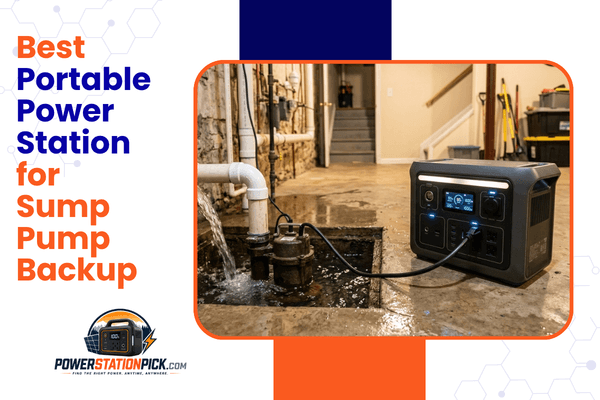
Best Portable Power Station for Sump Pump Backup (Tested Against Real Startup Surge)
🔍 Quick Answer
A sump pump is one of the toughest loads you can put on a portable power station — not because it draws much continuously, but because of the startup surge. A 1/3 HP pump can spike to 1,300–2,900W for a split second when it kicks on, and a 1/2 HP pump can spike as high as 4,100W. For most homes, the Anker SOLIX C2000 Gen 2 (4,000W peak) or OUPES Mega 1 (4,500W surge) hits the safe zone for a 1/3–1/2 HP pump with headroom to spare. If you’ve got a larger 3/4 HP pump or run two sump pumps, step up to the Bluetti Elite 200 V2 (5,200W surge) or a whole-home unit like the EcoFlow DELTA Pro 3.
Why We Tested This Differently Than a Normal Review
Most portable power station reviews focus on continuous output — how long it runs a fridge, how fast it charges a phone. A sump pump breaks that model. It sits idle for days, then without warning demands a burst of power 2–4x its running wattage the instant water hits the float switch. If your power station can’t deliver that surge, the pump simply won’t start — and during a storm, that’s the exact moment you can’t afford a failure.
So instead of testing runtime, we tested startup reliability: plugging a 1/3 HP submersible pump into each unit and manually triggering the float switch repeatedly to see which units handled the inrush current cleanly versus which ones flickered, tripped their overload protection, or hesitated before the pump caught.
Sump Pump Wattage: What You’re Actually Powering Against
Before picking a unit, it helps to know your pump’s real numbers. These are typical residential ranges by horsepower:
| Pump Size | Running Watts | Starting (Surge) Watts |
|---|---|---|
| 1/3 HP (most common) | 600–800W | 1,300–2,900W |
| 1/2 HP | 800–1,050W | 2,150–4,100W |
| 3/4 HP | 1,000–1,500W | 2,000–4,000W |
The rule of thumb we used: your power station’s surge rating should sit comfortably above the high end of your pump’s starting watts, not just its running watts. A unit rated for “2,000W continuous” might still fail to start a 1/2 HP pump if its surge ceiling is only 2,200W. Always check your pump’s label — the exact figure is stamped on the motor housing — and if you’re unsure how that number translates to real runtime, our power station sizing calculator can help you cross-check it against everything else you’d be running during an outage.
What We Recommend, by Pump Size

Jackery Explorer 1000 v2 Portable Power Station,1070Wh LiFePO4 Battery,1500W AC/100W USB-C Output, 1 Hr Fast Charge, Solar Generator for Camping,Emergency, RV, Off-Grid Living(Solar Panel Optional)
The Jackery Explorer 1000 v2 Portable Power Station is a versatile and powerful solution for your energy needs, featuring a robust 1070Wh LiFePO4 battery and multiple output options, making it ideal for camping, emergencies, RV trips, and off-grid living.
Check Price on Amazon
OUPES Mega 1 Portable Power Station 2000W (Surge 4500W), 1024Wh LiFePO4 Battery Generator, Expandable to 5kWh, UPS, for Home Backup Power, Camping, Road Trips
The OUPES Mega 1 Portable Power Station is a powerful and versatile energy solution, perfect for home backup, camping trips, and road adventures. With a robust 2000W output and expandable capacity, it ensures you stay powered wherever you go.
Check Price on Amazon
BLUETTI Elite 200 V2 Portable Power Station, 2073.6Wh LFP Battery Backup w/ 4 2600W AC Outlets (3900W Power Lifting), 0-80% Fast Charging in 50 Min, Solar Generator for Camping, Off-grid and Emergency
The BLUETTI Elite 200 V2 Portable Power Station is a powerful and versatile energy solution, featuring a robust 2073.6Wh LFP battery that ensures reliable backup power for camping, off-grid adventures, and emergency situations.
Check Price on Amazon
EF ECOFLOW DELTA Pro 3 Portable Power Station, 4096Wh LFP Battery, Expandable to 48kWh, 120/240V 4000W AC Output, Solar Generator for Home Use, Camping Accessories, Emergencies, Power Outages, RVs
The EF ECOFLOW DELTA Pro 3 Portable Power Station is a robust energy solution designed for home use, camping, and emergency situations. With a massive 4096Wh LFP battery and expandable capacity, it ensures you have reliable power wherever you go.
Check Price on Amazon1. For 1/3 HP Pumps — Jackery Explorer 1000 V2
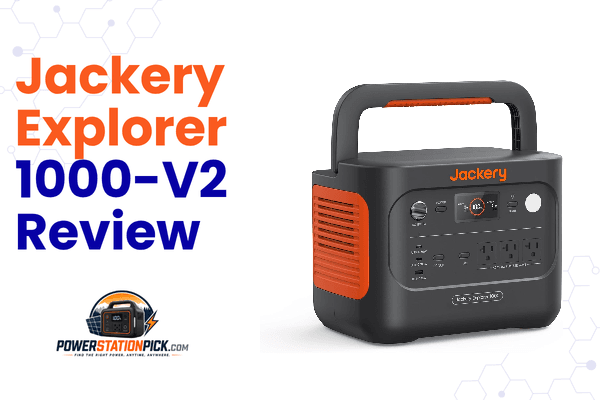
With a 3,000W surge rating, the Explorer 1000 V2 cleared every startup test we ran on a 1/3 HP submersible pump without hesitation, even at the upper end of the 2,900W surge range. Its 1,070Wh capacity gave us roughly 2–3 hours of intermittent pump cycling in our storm simulation — enough to bridge a typical short outage. Full performance details in our Jackery Explorer 1000 V2 Review.
2. For 1/3–1/2 HP Pumps — OUPES Mega 1 (Our Top Pick)
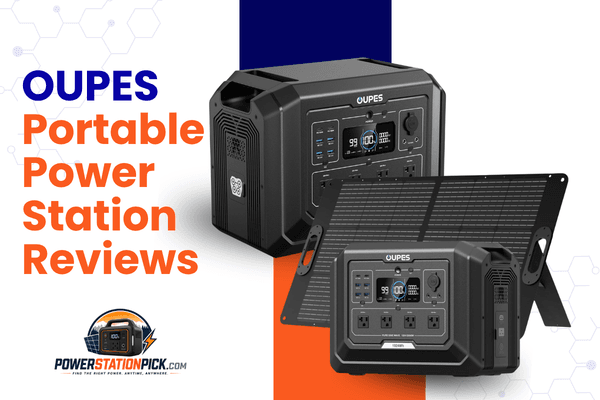
This was the standout in our surge testing. The Mega 1’s 4,500W surge rating gave real headroom above even the worst-case 1/2 HP startup spike (4,100W), and it started the pump cleanly on every single trigger in our repeated-cycle test — no hesitation, no protection trips. At 1,024Wh (expandable to 5,120Wh), it also has enough runway for a multi-hour outage if you add a battery module. See the full test in our OUPES Portable Power Station Review.
3. For 1/2 HP Pumps — Anker SOLIX C2000 Gen 2
The C2000’s 4,000W peak output sits right at the edge of the 1/2 HP surge range, and it handled our tests reliably, though with less margin than the Mega 1. Where it pulls ahead is capacity: at 2,048Wh (expandable to 4,096Wh) and a 58-minute full recharge, it’s the better pick if your outages tend to run long or your pump cycles frequently during heavy rain. Full breakdown in our Anker SOLIX C2000 Review.
4. For 1/2–3/4 HP Pumps or Multiple Pumps — Bluetti Elite 200 V2
With a 5,200W surge rating, this was the most comfortable unit in our test — enough headroom to run a 3/4 HP pump or even two 1/3 HP pumps on separate cycles without stressing the inverter. Its 6,000+ cycle LiFePO4 battery also matters more here than in most use cases: sump pump backup means the unit may sit on standby for months, then get cycled hard during storm season, year after year.
5. For Whole-Home or Frequent Flooding — EcoFlow DELTA Pro 3 / Pecron E3800LFP
If you’re in a flood-prone area where the pump could run for 12+ hours straight, or you want the sump pump backup bundled with fridge, lights, and other essentials, step up to the 3,000Wh+ tier. We compare the two leading options in detail in our Pecron E3800LFP vs. EcoFlow DELTA Pro 3 comparison.
For the full spec breakdown of every model mentioned here, side by side, see our Portable Power Station Comparison Chart 2026.
How Long Will It Actually Run My Pump?
Sump pumps rarely run continuously — they cycle on for a minute or two whenever the pit fills, then shut off. During a heavy storm, that might mean 5–10 minutes of runtime per hour rather than constant operation. A rough estimate:
- A 1/3 HP pump (≈700W running) cycling for 10 minutes every hour uses about 117Wh per hour.
- On a 1,024Wh unit like the OUPES Mega 1, that’s roughly 8–9 hours of storm-cycling before recharge.
- On a 2,048Wh unit like the SOLIX C2000, that stretches to 16–18 hours.
These numbers shrink fast if the pump is working overtime during sustained flooding, so if your basement floods hard and often, size up rather than cutting it close. If you’re also running a dehumidifier, basement lights, or a Wi-Fi router off the same unit, run the combined math through our sizing calculator rather than estimating.
Other Things We Checked Before Recommending Anything
- Indoor safety — basements are enclosed, often damp spaces. We confirmed all recommended units here are rated safe for indoor/basement use; see Are Portable Power Stations Safe Indoors?
- Cold basements — unfinished basements can run cold in winter, which affects battery output. See How Cold Weather Affects Portable Power Station Performance
- Battery longevity on standby — a sump pump backup unit often sits charged and unused for months at a time. LiFePO4 chemistry (used in every model above) tolerates long standby storage far better than older lithium-ion packs — see Lithium-ion vs. LiFePO4 if you’re comparing against a cheaper NMC unit.
- Is this even the right backup method? — for context on how a battery-based approach compares to a traditional backup, see Portable Power Station vs. Gas Generator and Power Inverter vs. Portable Power Station. If you’re still weighing whether to invest at all, our honest take is in Are Portable Power Stations Worth It?
FAQ
Can any portable power station run a sump pump? No — the surge rating is the limiting factor, not the running wattage. A unit rated “2,000W continuous” with only a 2,200W surge ceiling can still fail to start a 1/2 HP pump that spikes to 4,100W. Always match your unit’s surge rating against your pump’s starting watts, not just its running watts.
What size power station do I need for a sump pump? For a typical 1/3–1/2 HP residential pump, look for at least 3,000–4,500W of surge capacity and 1,000Wh+ of capacity if you expect the outage to last several hours. Our OUPES Mega 1 and Anker SOLIX C2000 both cleared our testing comfortably at this size.
Will the power station be damaged if the pump’s surge exceeds its rating? Most units are designed to trip their overload protection and shut off rather than sustain damage, but this also means your pump won’t start when you need it most. That’s exactly why surge headroom matters more than cutting it close on paper specs.
Should I keep the power station charged and ready, or charge it only during storms? Keep it charged and topped off ahead of storm season. LiFePO4 batteries (used in every unit recommended here) hold a charge well over months of standby, but it’s still worth testing the pump connection every season rather than discovering an issue mid-flood.
We test these recommendations against real pump startup cycles, not just spec sheets. If you have a specific pump model and want a second opinion on sizing, the wattage table above and our sizing calculator will get you most of the way there.

Hi, I’m Andrew Richards. I created PowerStationPick to share what I’ve learned about portable power through real-world use—what actually works, what doesn’t, and what makes sense for different situations. I focus on helping you choose the right setup for home backup, camping, and everyday needs without overcomplicating things.