Are Portable Power Stations Worth It? An Honest Expert Breakdown
Quick Answer: Are They Worth It?
Yes, portable power stations are worth it for most people, especially if you value safety, silence, and indoor use. While more expensive upfront than gas generators, they offer a maintenance-free “insurance policy” for power outages and outdoor adventures.
Buy one if you:
- ✔ Need a safe power source for indoor use during outages.
- ✔ Camp or travel in an RV/Van and want silent, solar-ready energy.
- ✔ Depend on medical devices (CPAP) or remote work setups.
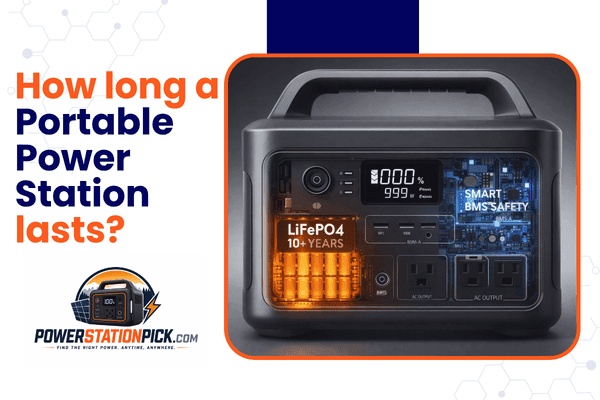
Pro Tip: Look for LiFePO4 (LFP) battery chemistry. It lasts 6x longer than standard lithium batteries, making your investment last 10+ years.
If you’ve been eyeing a portable power station lately, you’re not alone. These things are everywhere — YouTube reviews, REI shelves, Amazon bestseller lists. And the prices range from $150 to well over $3,000, which naturally raises a fair question: are portable power stations actually worth the money?
I’ve spent years testing, using, and researching these devices across different scenarios — camping trips, power outages, van builds, and RV hookups. And the honest answer? It depends. But for most people reading this, the answer is yes — with the right expectations and the right unit.
Let me break it all down for you.
What Is a Portable Power Station, Exactly?
Before we dig into whether they’re worth it, let’s make sure we’re talking about the same thing.
A portable power station (also called a solar generator or battery generator) is a rechargeable lithium battery unit with built-in AC outlets, USB ports, DC ports, and sometimes a car charging port. Unlike traditional gas generators, they produce no fumes, run silently, and can be used indoors.
Think of it as a giant rechargeable battery pack — one that can power a mini fridge, charge your laptop, run a CPAP machine, or keep your lights on during a blackout.
Popular brands include EcoFlow, Jackery, Bluetti, Anker, and Goal Zero, and capacities typically range from 250Wh (watt-hours) all the way up to 5,000Wh or more for home backup systems.
Who Actually Benefits From a Portable Power Station?
This is where the “worth it” question gets interesting. The answer changes based on who you are and how you plan to use it.
Homeowners Facing Power Outages
If you live in an area prone to hurricanes, ice storms, or rolling blackouts, a portable power station is genuinely useful. It won’t run your entire home like a whole-home standby generator, but it can:
- Keep your refrigerator running for several hours
- Power medical devices like CPAP or nebulizers
- Charge phones, tablets, and laptops
- Run a box fan or small space heater
- Keep lights on throughout the night
After hurricanes, winter storms, and grid failures across the country, many homeowners have realized that a $500–$1,500 power station is a reasonable insurance policy against being completely helpless in an outage.
Campers and Outdoor Enthusiasts
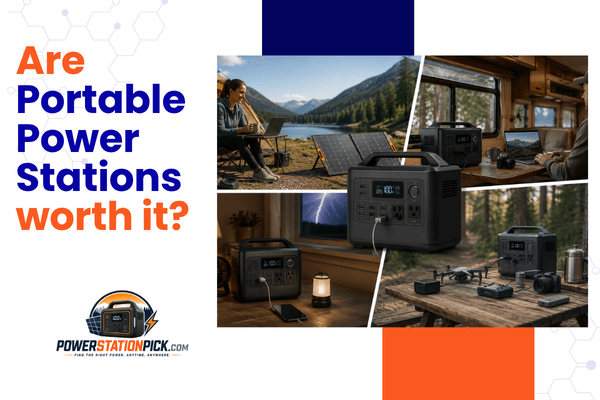
If you spend weekends at campsites — especially sites without electrical hookups — a portable power station removes a lot of friction from the experience. You can:
- Charge camera batteries and drones overnight
- Run a portable electric cooler instead of dealing with ice
- Power LED camp lights and fans
- Use a portable espresso maker in the morning
- Keep phones charged for navigation and safety
For car campers, the convenience factor alone makes these units worth it. You’re not relying on your car battery, you’re not listening to a noisy generator, and you don’t have to pack fuel cans.
RV Travelers
RV users have been among the biggest adopters of portable power stations, and for good reason. When you’re boondocking (camping off-grid without hookups), having a large power station paired with a couple of solar panels means:
- You can camp anywhere without paying for a hookup site
- You can run 12V appliances, fans, lights, and devices quietly
- Your solar panels keep the battery topped off during the day
- You reduce wear on your RV’s internal battery bank
For full-time RVers especially, the math can work out strongly in favor of a good power station setup over time.
Van Life and Off-Grid Living
The van life community has essentially standardized around portable power stations and roof-mounted solar panels. A 1,000–2,000Wh unit can comfortably power a laptop, phone, small fridge, and lighting for a full day — often with enough solar input to make the system self-sustaining in good weather.
If you’re working remotely from a van, this isn’t a luxury. It’s a necessity.
Emergency Preparedness Buyers
FEMA recommends having at least 72 hours of emergency supplies. For many households, a portable power station is now part of that preparedness kit alongside water, food, and first aid supplies.
The value here isn’t measured in daily use — it’s about having peace of mind. A well-rated unit sitting in your garage ready to go is worth every penny the moment you actually need it.
The Real Costs: What You’re Actually Paying For
Here’s a breakdown of what you’re getting across different price tiers, so you can make a more informed decision.
| Price Range | Capacity | Best For |
|---|---|---|
| $150–$350 | 250–500Wh | Phone/laptop charging, small devices, camping |
| $400–$800 | 500–1,000Wh | Camping, weekend outages, van life basics |
| $800–$1,500 | 1,000–2,000Wh | RV boondocking, longer outages, home essentials |
| $1,500–$3,500 | 2,000–5,000Wh | Extended off-grid living, serious home backup |
| $3,500+ | 5,000Wh+ | Whole-home backup, heavy appliances, professional use |
What drives the price is primarily battery capacity, battery chemistry (LFP vs NMC), inverter quality, charging speed, and the number/type of output ports.
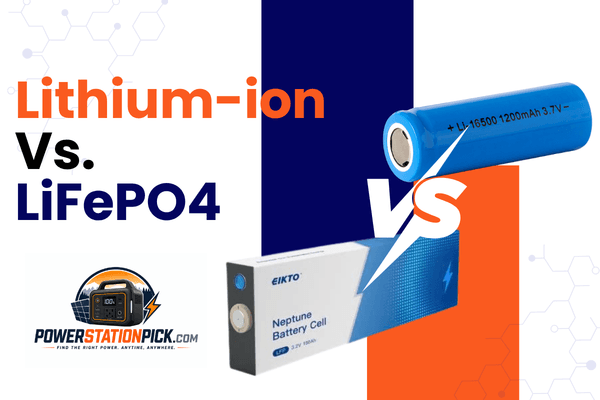
Lithium Iron Phosphate (LFP) batteries are worth paying a premium for. They last significantly longer — often 3,000–4,000 charge cycles vs. 500–800 for older NMC chemistry. That translates to 8–10+ years of use versus 2–3 years if you use it regularly. Units from Bluetti and EcoFlow increasingly use LFP, which makes them a smarter long-term investment even at a higher upfront cost.
Portable Power Stations vs. Gas Generators: Which Wins?
| Feature | Portable Power Station | Gas Generator |
|---|---|---|
| Indoor use | ✅ Yes — no fumes | ❌ No — carbon monoxide risk |
| Noise level | ✅ Silent | ❌ Very loud |
| Fuel required | ❌ No fuel needed | ❌ Requires gasoline/propane |
| Maintenance | ✅ Minimal | ❌ Regular maintenance |
| Run time | Limited by battery capacity | As long as you have fuel |
| Charging from solar | ✅ Yes | ❌ No |
| High-wattage | Limited by inverter | Can handle larger loads |
| Cost over time | Lower (no fuel) | Higher (ongoing fuel) |
| Impact | Lower | Higher |
For most homeowners dealing with occasional outages, the convenience and safety advantages of a power station outweigh the run-time limitations. For extended multi-day outages or running large appliances like central AC or a well pump, a gas generator might still win on raw capability.
But the two aren’t mutually exclusive. Many preparedness-focused households have both.
Solar Panel Compatibility: The Game-Changer
Here’s something that makes portable power stations dramatically more valuable: add solar panels and they essentially pay for themselves over time.
Most quality power stations accept solar input through an MPPT charge controller. Pair a 1,000Wh unit with two or three 100–200W folding solar panels, and you have a system that can recharge fully from sunlight in 4–8 hours depending on conditions.
For campers and RVers especially, this means:
- No electricity bills at campsites
- True off-grid independence
- Continuous power as long as the sun shines
EcoFlow’s Delta series, Bluetti’s AC200 line, and Jackery’s Explorer units are all well-known for strong solar compatibility and efficient MPPT charging. It’s one of the biggest reasons seasoned campers are willing to spend $1,000+ on a power system.
Common Objections — Addressed Honestly
“They’re too expensive.”
They’re not cheap, that’s true. But compare the cost to what you spend on a camping generator, fuel over a season, or the food you’d lose in a fridge during a power outage. Many people find that a $600 power station pays for itself within a year or two of regular use.
Also worth noting: prices have dropped significantly in the past three years. Units that cost $1,200 in 2021 can be found for $700–$800 today with better specs.
“The battery will die in a few years.”
This used to be a legitimate concern with older NMC lithium units. Modern LFP battery stations, however, are rated for 3,000+ charge cycles — meaning if you cycle the battery once a day, it still lasts over 8 years before hitting 80% capacity. That’s genuinely impressive longevity.
“They don’t have enough power for what I need.”
This comes down to choosing the right size. A lot of buyers either undersize (frustrating) or oversize (expensive). Before buying, make a list of what you need to power, look up the wattage requirements for each device, and add them up. That gives you a starting point for selecting the right capacity.
“I can just use my car to charge things.”
You can — up to a point. But running your car’s engine to charge devices is inefficient, produces fumes, and can drain your car battery unexpectedly. A power station is purpose-built for this, charges faster, and does it more safely.
How to Know If a Portable Power Station Is Worth It For You
Ask yourself these questions:
- Do I experience power outages more than once or twice a year?
- Do I camp, travel in an RV, or live in a van?
- Do I work remotely and need power away from outlets?
- Do I have medical devices that need continuous power?
- Do I care about being prepared for emergencies?
- Am I trying to reduce generator noise, fuel costs, or fumes?
If you answered yes to two or more of these, a portable power station is almost certainly worth the investment.
If you answered yes to just one — especially emergency preparedness — it’s still worth considering, particularly as prices continue to drop.
Top Tips for Getting the Most Value
If you decide to go ahead, here’s how to make sure you’re getting your money’s worth:
- Match capacity to real needs. Don’t buy a 300Wh unit and expect to run a full-size fridge. Use a wattage calculator before you buy.
- Prioritize LFP battery chemistry. It costs a little more upfront but lasts dramatically longer. Brands to look for: Bluetti, EcoFlow Delta Pro, Anker SOLIX.
- Check the recharge speed. Some units can recharge in 1–2 hours via wall outlet (EcoFlow’s X-Stream charging, for example). Others take 8–12 hours. Speed matters for outage scenarios.
- Buy solar-compatible units from the start. Even if you don’t add panels today, having the option later dramatically extends the unit’s usefulness.
- Look for sales and bundles. Power station deals are common on Amazon Prime Day, Black Friday, and brand-direct sales. You can often save 20–30% with patience.
- Read real-world reviews, not just specs. Manufacturer claims about capacity and run time are often tested under ideal conditions. Real user reviews give you a better picture of actual performance.
Frequently Asked Questions
How long will a portable power station run a refrigerator?
It depends on the fridge’s wattage and the station’s capacity. A typical mini fridge uses 30–100 watts. A 1,000Wh power station could theoretically run it for 10–30 hours, but real-world performance accounting for inverter efficiency is usually 60–70% of that — so roughly 6–20 hours for most mid-size units.
Can a portable power station run a CPAP machine?
Yes. Most CPAP machines use 30–60 watts without a humidifier. A 500Wh power station can typically run a CPAP for an entire night (8 hours) with capacity to spare, making these units popular for sleep apnea sufferers who camp or travel.
What size portable power station do I need for emergency home backup?
For basic emergency needs (phone charging, lights, a fan, and a mini fridge), a 1,000–1,500Wh unit is a solid starting point. For powering a full-size fridge, a sump pump, or medical equipment over multiple days, look at 2,000Wh or larger — or consider units with expandable battery packs.
Are portable power stations safe to use indoors?
Yes. Unlike gas generators, portable power stations produce no carbon monoxide and are completely safe for indoor use. This is one of their biggest practical advantages.
How long do portable power stations last?
With modern LFP (Lithium Iron Phosphate) batteries, most quality units are rated for 3,000–4,000 charge cycles — often 8–10 years with regular use. Older NMC units last 500–800 cycles, or roughly 1–3 years with heavy use.
Is it worth buying a portable power station for camping?
For casual weekend camping with basic device charging needs, a 300–500Wh unit provides excellent value. For car camping with electric coolers, camera gear, and comfort appliances, a 1,000Wh+ unit with solar compatibility is worth the investment. Serious overlanders and boondockers almost universally say yes.
The Bottom Line: Are Portable Power Stations Worth It?
For the vast majority of people asking this question — yes. They genuinely are.
The technology has matured significantly. Prices have come down. Battery longevity has improved dramatically. And the use cases are real and varied — emergency preparedness, camping, RV travel, remote work, off-grid living, and simply not wanting to panic when the power goes out.
The key is buying the right size for your actual needs and choosing a unit with quality battery chemistry and a reputable brand behind it.
If you’re still not sure where to start, check out our recommended portable power stations — we’ve tested and reviewed the top options across every budget so you can find the right fit without the guesswork.

Hi, I’m Andrew Richards. I created PowerStationPick to share what I’ve learned about portable power through real-world use—what actually works, what doesn’t, and what makes sense for different situations. I focus on helping you choose the right setup for home backup, camping, and everyday needs without overcomplicating things.