Lithium Ion vs. LiFePO4 Battery: Which is the Ultimate Winner in 2026?
🔍 QUICK VERDICT: NMC VS. LFP
LiFePO4 (LFP) is the superior choice for 2026, offering 3,000–6,000+ cycles (10-15 years) and unmatched thermal safety for indoor use. While Lithium-ion (NMC) is 20-30% lighter and more compact, it only lasts 500–800 cycles (2-3 years). For home backup, RVs, and long-term value, always go with LiFePO4.
Introduction: The Great Battery Shift
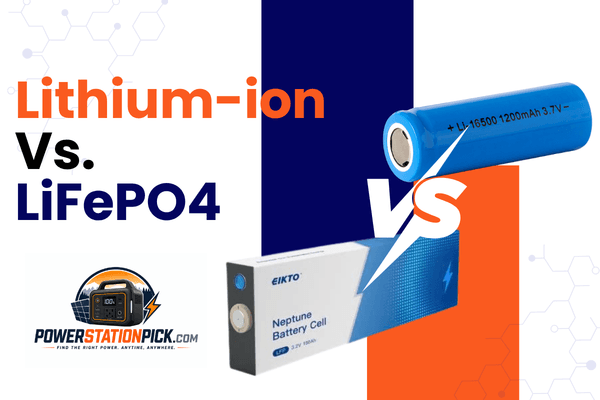
As we move through 2026, the portable power station industry has undergone a massive transformation. The debate is no longer just about capacity; it’s about the chemistry inside the cells. While “Lithium-ion” is a broad term, in the world of power stations, it typically refers to NMC (Nickel Manganese Cobalt). On the other side, we have the rising titan: LiFePO4 (Lithium Iron Phosphate), or LFP.
Choosing between these two chemistries will determine whether your investment lasts for 2 years or 15 years. This guide dives deep into the technical nuances of Lithium Ion vs. LiFePO4 to help you make an expert decision.
What is a Lithium-ion (NMC) Battery?
Traditional Lithium-ion batteries used in many older power stations and high-end smartphones use a combination of Nickel, Manganese, and Cobalt (NMC) as the cathode material.
Strengths of NMC
- High Energy Density: NMC batteries can store a large amount of energy in a very small, lightweight package. This is why they are still used in drones and ultra-lightweight power banks.
- Lower Initial Cost: Historically, NMC was cheaper to mass-produce, making entry-level power stations more affordable.
Weaknesses of NMC
- Thermal Instability: NMC has a lower “thermal runaway” threshold, meaning it is more prone to fire if punctured or overcharged.
- Shorter Life: Most NMC cells degrade significantly after 500 to 800 charge cycles.
What is a LiFePO4 (LFP) Battery?
LiFePO4 uses Lithium Iron Phosphate as the cathode material. In 2026, this chemistry has dominated the market, with brands like EcoFlow, Bluetti, and Jackery shifting their entire flagship lineups to LFP.
Strengths of LFP
- Unmatched Longevity: LFP batteries typically offer 3,000 to 6,000+ full charge cycles before dropping to 80% capacity.
- Extreme Safety: The chemical bond in LFP is much stronger and more stable. It can withstand high temperatures and physical damage without catching fire.
- Eco-Friendly: LFP does not contain cobalt, a rare and expensive metal often associated with unethical mining practices.
Weaknesses of LFP
- Weight: LFP batteries are roughly 20–30% heavier than NMC for the same capacity.
- Lower Voltage Discharge: They have a flatter discharge curve, which requires more sophisticated Battery Management Systems (BMS).
Head-to-Head Comparison: The Technical Breakdown
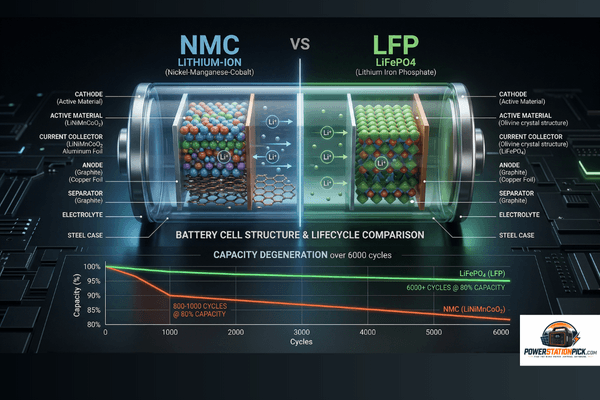
| Feature | Lithium-Ion (NMC) | LiFePO4 (LFP) |
| Cycle Life (to 80%) | 500 – 800 Cycles | 3,000 – 6,000+ Cycles |
| Lifespan | 2 – 4 Years | 10 – 15 Years |
| Safety | Moderate (Thermal risk) | High (Very Stable) |
| Energy Density | High (Lightweight) | Moderate (Heavier) |
| Charge Temperature | 0°C to 45°C | -20°C to 60°C (with BMS) |
| Best For | Ultra-portable gear | Home Backup & Vanlife |
Longevity and Cost-Efficiency (ROI)
When looking at Lithium Ion vs. LiFePO4, you must consider the Cost per Cycle.
Let’s look at the math:
- NMC Station ($1,000): 500 cycles = $2.00 per cycle.
- LFP Station ($1,200): 3,500 cycles = $0.34 per cycle.
Even though a LiFePO4 power station might cost 20% more upfront, it is nearly 6 times more cost-effective over its total life. By 2026, savvy consumers prioritize the “Price per Year” rather than the sticker price.
Safety: The Peace of Mind Factor
For indoor use—especially in bedrooms or tight van spaces—safety is paramount.
Thermal Runaway
NMC batteries can experience thermal runaway at temperatures as low as 150°C (302°F). Once a cell starts to fail, it creates a chain reaction that is very difficult to extinguish.
The LFP Advantage
LiFePO4 is thermally stable up to 270°C (518°F). Even in the event of a catastrophic failure, LFP tends to vent gas rather than burst into flames. This makes LFP the only choice we recommend for permanent indoor home backup systems.
Performance in Extreme Temperatures
One of the common myths is that LFP performs poorly in the cold. While it’s true that all lithium batteries struggle in freezing temps, 2026 LiFePO4 technology has closed the gap.
- Charging in Cold: No lithium battery should be charged below 0°C (32°F). Modern LFP stations now include internal heating pads that use a small amount of energy to warm the cells before accepting a charge.
- Discharge Power: LFP maintains a steady voltage throughout its discharge cycle (100% down to 10%), whereas NMC voltage often drops significantly as the battery gets low, causing some high-draw appliances to shut off prematurely.
🏆 Which Battery Is Better for Portable Power Stations?
If you are looking for a definitive answer in 2026, the winner depends on your specific lifestyle. However, for 90% of users, LiFePO4 (LFP) is the superior choice.
The Winner for Home Backup & Vanlife: LiFePO4 (LFP)
For anyone using their power station as a serious tool—whether for emergency home backup, living off-grid, or frequent camping—LiFePO4 is the undisputed champion.
- Why: You pay for it once, and it lasts for over a decade. The peace of mind knowing that the battery is thermally stable (non-combustible) while you sleep in a van or a bedroom is worth every extra pound of weight.
- Verdict: Better for long-term ROI and safety.
The Winner for Extreme Portability: Lithium-ion (NMC)
There is still a small niche where traditional Lithium-ion wins: mobility.
- Why: If you are a landscape photographer hiking miles into the wilderness or a backpacker who needs to keep weight to an absolute minimum, the energy density of NMC is still valuable.
- Verdict: Better for occasional use where every ounce of weight counts.
Summary Verdict: The 2026 Gold Standard
The industry has spoken: LiFePO4 is the new gold standard. Brands that fail to offer LFP in their flagship models are quickly falling behind. When you invest in a portable power station today, you aren’t just buying a battery; you are buying “cycles.”
Expert Tip: If a deal on an NMC power station looks too good to be true, check the cycle life. Paying $200 less for a unit that lasts 2,500 fewer cycles is a bad investment in the long run.
Environmental Impact and Sustainability
As an eco-conscious consumer, the choice of chemistry matters.
- Cobalt-Free: LiFePO4 does not use cobalt, reducing the environmental and ethical footprint of your power station.
- Waste Reduction: Since LFP lasts 5x longer than NMC, you are keeping heavy machinery out of landfills for much longer.
❓ FAQ (Search Intent Optimized)
Q: Can I replace an NMC battery with an LFP battery?
A: Not directly. The voltages and charging profiles are different. You must use a power station specifically designed for the chemistry inside.
Q: Is LiFePO4 worth the extra weight?
A: For most users, yes. The 20% increase in weight is a small price to pay for a device that lasts 10 years longer and is significantly safer to store in your home.
Q: Does fast charging damage LiFePO4?
A: LFP is much more resilient to fast charging than NMC. While heat is always a factor, LFP can handle high-input wattages with much less degradation.
🏆 Final Verdict: Which is Best for You in 2026?
Choose LiFePO4 (LFP) if:
- You want a power station for Home Backup or Vanlife.
- You plan to use the device frequently (daily or weekly).
- Safety is your #1 priority for indoor use.
- You want the best long-term return on investment.
Choose Lithium-ion (NMC) if:
- Weight is your only concern (e.g., for backpacking or high-altitude climbing).
- You only plan to use the device 1–2 times a year for short trips.
- You are on an extremely tight budget and don’t mind replacing the unit in a few years.

Hi, I’m Andrew Richards. I created PowerStationPick to share what I’ve learned about portable power through real-world use—what actually works, what doesn’t, and what makes sense for different situations. I focus on helping you choose the right setup for home backup, camping, and everyday needs without overcomplicating things.