Portable Power Station Pros and Cons
Should You Buy a Portable Power Station?
The choice between a portable power station and a gas generator depends on your location, environment, and specific power needs:
- Choose a Portable Power Station if: You need silent, zero-emission indoor power for apartments, tents, or vehicles to run medical devices (CPAP), delicate mobile electronics, refrigerators, and low-to-mid-wattage camping appliances.
- Choose a Gas Inverter Generator if: You need continuous, ultra-high-wattage electricity for heavy construction tools, whole-house air conditioners, or multi-day emergency blackouts where carrying extra fuel is easier than waiting hours for solar or wall recharging.
Over the last few years, the way we manage mobile, off-grid electricity has undergone a massive technological shift. Not long ago, if you wanted to run electronics while camping, power a CPAP machine during a storm, or run a mobile work truck, your only choice was a loud, vibrating, gas-guzzling conventional generator.
Today, lithium-based portable power stations—often marketed interchangeably as solar generators—have completely altered that landscape. Driven by rapid advancements in battery chemistry, these large-scale power banks have surged in popularity among car campers, full-time RV travelers, off-grid van lifers, and suburban homeowners alike.
However, because these devices are heavily marketed across social media with glossy promotional videos, many buyers dive in with unrealistic expectations. They assume a battery pack the size of a cooler can seamlessly run their central air conditioning or power their entire household for days on end.
While a portable power station for coffee maker duty, laptop charging, or running a mini-fridge is an exceptional tool, it is not a magic bullet. To avoid expensive buyer’s remorse, you need to look past the marketing hype and understand the hard physics behind portable power station pros and cons.
In this comprehensive, experience-based guide, we will break down the structural advantages, hidden drawbacks, real-world runtime limitations, and the true cost-per-cycle of modern battery power generators.
What Is a Portable Power Station?
At its core, a portable power station is an oversized, highly sophisticated lithium battery pack enclosed in a rugged, safety-shielded housing. However, unlike a simple pocket battery bank used to charge your cell phone, a portable power station contains three interconnected, industrial-grade electronic components that allow it to safely act as a standalone utility grid:
- The Battery Cell Matrix: This is the core storage tank where energy is held. In 2026, the industry has widely standardized around LiFePO4 (Lithium Iron Phosphate) chemistry, replacing older NMC (Nickel Manganese Cobalt) cells due to LFP’s superior safety profile and vastly longer life cycles.
- The Battery Management System (BMS): This is the internal computer brain. It constantly monitors every individual cell’s voltage, temperature, and current intake. The BMS acts as the primary safety barrier, preventing overcharging, deep cell discharges, short circuits, and thermal runaway.
- The Pure Sine Wave Inverter: Batteries store power as Direct Current (DC). However, household appliances—like your TV, microwave, or refrigerator—require Alternating Current (AC) from a wall outlet. The internal inverter converts the battery’s raw DC power into clean, stable AC electricity that mimics or exceeds the quality of your home’s wall outlets.
Power Stations vs. Traditional Generators
The fundamental operational difference between a power station and a traditional generator is generation vs. storage.
A gas generator is an internal combustion engine. It does not store an electrical charge; it burns fossil fuels (gasoline, propane, or diesel) to spin an alternator, creating mechanical energy that turns instantly into electricity.
A portable power station does not create a single watt of energy on its own—it merely acts as a clean, rechargeable reservoir. It must be filled up beforehand via a home wall outlet, a vehicle’s 12V DC port while driving, or via connected solar panels.
Main Pros of Portable Power Stations
When assessing the advantages of portable power stations, it becomes clear why they have disrupted the traditional backup power market so rapidly. For a vast majority of recreational users and homeowners, the lifestyle benefits completely eclipse those of gas-powered hardware.
Quiet Operation
The absolute most immediate, satisfying benefit of a battery-powered system is its near-silent operation. Traditional open-frame gas generators scream at 70 to 80 decibels (dBA), while even high-end enclosed “quiet” gas inverter generators hover around 53 to 60 dBA. This mechanical roar can cause sleep deprivation during a home emergency and will quickly alienate neighboring campers at a campground.
A portable power station produces zero mechanical noise. The only sound it ever generates is a soft, muffled hum from its internal cooling fans when the AC inverter is pushed to its maximum threshold. When running low-to-mid-range items like laptops, CPAP machines, or lights, the unit operates in complete silence, allowing you to sleep peacefully next to it inside a tent or bedroom.
No Fuel Required
Gasoline is volatile, smelly, dangerous to store indoors, and degrades quickly over time if not treated with chemical stabilizers. If a disaster strikes, finding an open gas station with working electricity can become an impossible chore.
Portable power stations require absolutely no fossil fuels. You don’t have to carry extra metal jerrycans on the back of your vehicle or worry about fuel spilling inside your trunk. The system runs entirely on stored electrons, giving you a cleaner, worry-free energy ecosystem.
Safe for Indoor Use
Because traditional generators burn fuel, they continuously emit toxic exhaust fumes, including lethal, odorless Carbon Monoxide (CO) gas. Because of this, a gas generator must never be operated inside a home, garage, tent, or camper, requiring complex extension cords run out into the weather.
CRITICAL SAFETY WARNING: According to the Consumer Product Safety Commission, running a gas generator indoors can kill a human within minutes. Portable power stations release absolutely zero emissions, making them 100% safe to operate inside tightly enclosed apartments, vehicles, or tents.
Portable and Easy to Use
Gas generators feature complex pull-cords, chokes, fuel valves, and oil reservoirs. If you haven’t started one in six months, the carburetor can easily gum up, leaving you stranded during an emergency if you aren’t mechanically inclined.
Portable power stations offer true plug-and-play convenience. There are no switches to prime or cords to pull. You simply push a master power button, plug your appliance into the built-in outlet, and it runs instantly. Even large-scale heavy-duty units are often built with integrated luggage handles and robust rolling wheels, allowing anyone to move them effortlessly.
Solar Charging Capability
When you couple a portable battery with a folding set of monocrystalline photovoltaic panels, it transitions into a solar generator. This gives you a continuous, self-sustaining loop of renewable energy. As long as the sun rises, you can harvest clean power during the day while simultaneously drawing from the battery bank at night, offering immense security for long-term off-grid living and prolonged emergency blackouts.
Low Maintenance
A gas engine requires routine oil changes, spark plug swaps, air filter cleanings, and complex winterization procedures to drain fuel lines.
A portable power station requires almost zero physical maintenance. There are no filters to clean, no oil levels to check, and no moving engine parts to wear out. Your only real maintenance obligation is taking the unit out of storage once every few months to top up the battery cells to preserve optimal calibration.
Multiple Charging Ports
A traditional generator typically only provides standard household AC wall plugs. If you want to charge a smartphone or tablet, you have to plug in a bulky wall brick adapter, which introduces unnecessary power conversion losses.
Modern power stations act as universal connectivity hubs. A single unit typically features:
- Standard 120V or 240V AC household outlets
- High-speed 100W USB-C Power Delivery (PD) ports for laptops
- Standard USB-A ports for small devices
- 12V DC cigarette lighter ports and specialized high-amperage XT60 ports for overland fridges
- Wireless charging pads integrated directly into the top chassis
Main Cons of Portable Power Stations
To maintain an objective, expert perspective, we must transition to the disadvantages of portable power stations. For all their high-tech appeal, battery generators have severe physical constraints that can blindside an unprepared user.
Limited Runtime
A gas generator will run indefinitely as long as you keep pouring fuel into its tank. A portable power station is strictly bound by its battery capacity (measured in Watt-hours, or Wh).
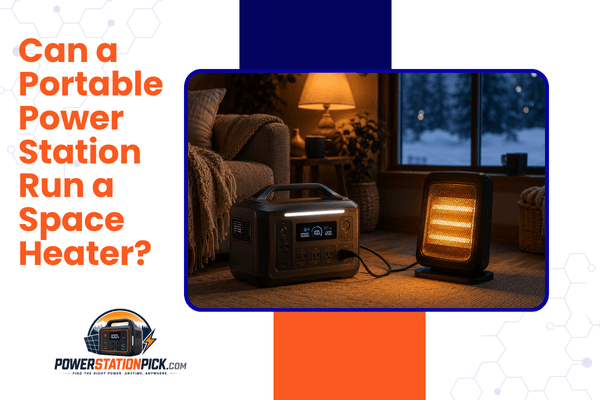
Once the battery capacity drains down to 0%, your power grid shuts down completely until you can find an active power source to recharge it. If you are running high-draw heating appliances like space heaters, hair dryers, induction cooktops, or electric kettles, a mid-sized 1,000Wh battery can easily be drained empty in under 45 minutes of continuous use.
Slower Recharge Times
Refueling a gas generator takes exactly 30 seconds—you pop the cap and pour in more gas. Recharging a massive depleted battery pack is a much slower process.
While premium 2026 units from brands like EcoFlow, Anker, and Bluetti offer rapid wall charging (often hitting 0% to 80% in about 1 hour), if you are charging purely via solar panels or your car’s 12V port while driving, hitting a full charge can take anywhere from 5 to 12+ hours depending on sunlight conditions and input ceilings.
Higher Upfront Cost
The initial financial investment required for high-end battery systems is significantly higher than conventional combustion engines.
You can purchase a robust 4,000-watt gas inverter generator for around $400 to $500. A comparable 4,000Wh premium LiFePO4 portable power station package with folding solar panels can easily cost between $2,500 to $3,500. While the long-term operational costs of batteries are much lower due to zero fuel expenses, the upfront financial hurdle prevents many budget-conscious buyers from adopting the technology.
Limited Power Output
An inverter’s capacity determines which specific devices you can turn on. Every power station has a strict continuous output wattage limit (e.g., 1,000W, 2,000W, or 3,000W). If you attempt to plug in a heavy-duty commercial tool, a deep-well water pump, or a central home air conditioner that demands more starting power than your station’s inverter can output, the system’s safety mechanism will immediately trip an “Overload” error code and cut the power.
Battery Degradation Over Time
No battery lasts forever. Every time you drain and recharge your power station, microscopic structural wear occurs within the chemical cells. This slow decay is known as battery degradation in portable power stations.
While modern LiFePO4 batteries are extraordinarily tough, often lasting 3,000 to 4,000 full charge cycles before dropping to 80% of their original out-of-the-box storage capacity, they still possess a definitive lifespan and will eventually need to be retired or replaced down the road.
Heavy, Bulky Profiles
Energy density has physical weight constraints. Lithium cells are heavy, and the high-copper components inside a heavy-duty AC pure sine wave inverter add substantial mass. A high-capacity power station capable of running major home appliances (around 2,000Wh to 3,800Wh) will routinely weigh between 45 to 100+ pounds. This makes them excellent for vehicular storage or rolling across a smooth garage floor, but highly impractical for casual walk-in tent camping or backpacking trips.
Portable Power Station vs. Gas Generator
To crystallize your buying strategy, let’s look at a direct head-to-head comparison across critical operational scenarios.
Power Station vs. Gas Generator Comparison Matrix
Are Portable Power Stations Worth It?
The ultimate answer to whether a portable power station is worth your hard-earned money depends entirely on your specific lifestyle, environment, and regional emergency risks.
You can find more information on this topic in the following article: Are Portable Power Stations Worth It?
When They Are 100% Worth It:
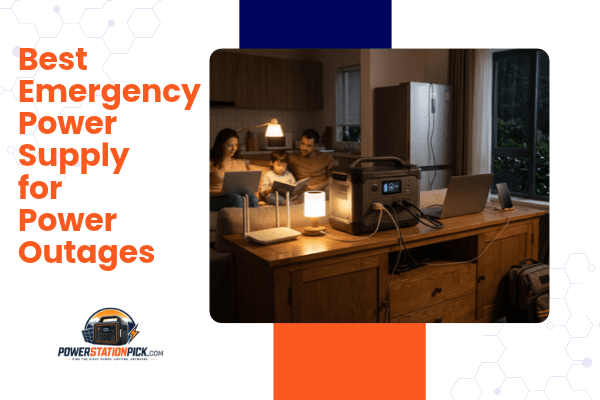
- Apartment Dwellers & Urban Homeowners: If you live in an urban apartment complex or a strict HOA community during a power outage, you cannot run a gas generator on a balcony or near shared walls. A silent power station is your only realistic choice to keep your refrigerator cold, your Wi-Fi router running, and your phones charged.
- CPAP & Medical Device Users: If your life or health relies on medical electronics overnight, the instant, silent power delivery of a battery pack placed directly next to your bed provides unmatched security.
- Car Campers & Van Lifers: For those looking to escape into nature without destroying the peace of the wilderness, a power station seamlessly integrates into a vehicle to run modern comforts silently.
When They Are NOT Worth It:
- Heavy Duty Job Sites: If your goal is running continuous high-amperage concrete saws, commercial space heaters, or structural welding rigs all day long, a rugged, high-output industrial gas generator remains the vastly superior tool for the job.
- Strictly Budget-Driven Buyers: If you only experience a 2-hour power outage once every three years and have a minimal budget, spending thousands on a high-end solar generator setup is financially impractical compared to keeping a few cheap portable phone power banks in your junk drawer.
Portable Power Station Buying Guide: Top 2026 Recommendations
To make this review actionable, here is an independent breakdown of the top-performing portable power stations currently leading the market in 2026, categorized by real-world deployment goals.
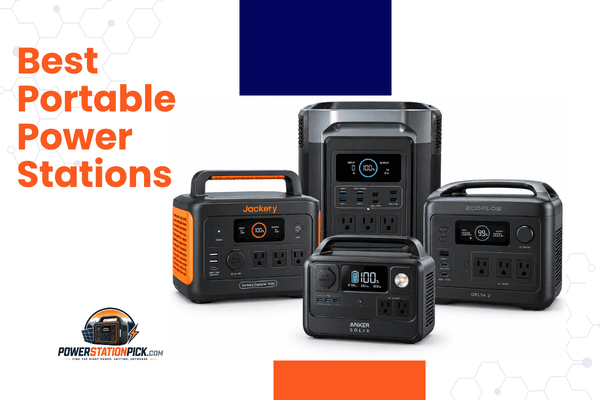
1. EcoFlow Delta 3 Plus (The Quick-Charging Champion)
- Capacity: 1,024Wh (Expandable up to 5,000Wh+ via smart extra batteries)
- Inverter Output: 1,800W Continuous (Surge up to 3,600W)
- Battery Chemistry: LiFePO4 (3,000+ Cycles to 80% capacity)
- Best For: Weekend car campers and home emergency backup who need rapid battery recovery.
- Pros: Class-leading wall recharge speed (0-80% in around 50 minutes); polished app interface; robust construction.
- Cons: Fan noise spikes noticeably when drawing over 1,500W of power.
2. Bluetti AC180 (The Rugged Overland Workhorse)
- Capacity: 1,152Wh
- Inverter Output: 1,800W Continuous (Power Lifting mode handles purely resistive heating elements up to 2,700W)
- Battery Chemistry: LiFePO4 (3,500+ Cycles to 80% capacity)
- Best For: Long-term overlanders, off-grid van builds, and robust field use.
- Pros: Ultra-stable chemical cell lifespan; very low standby phantom power draw; competitive pricing.
- Cons: Square industrial layout is slightly bulky and lacks folding handles.
3. Anker SOLIX C1000 (The Durable Everyday Champion)
- Capacity: 1,056Wh
- Inverter Output: 1,800W Continuous (Surge up to 2,400W)
- Battery Chemistry: LiFePO4 (3,000+ Cycles to 80% capacity)
- Best For: Suburban home readiness, tailgating, and outdoor electronic setups.
- Pros: Unmatched structural impact drop resistance (InfiniPower™ construction); ultra-compact footprint; 5-year comprehensive warranty.
- Cons: App setup requires an active local 2.4GHz Wi-Fi band for remote cloud control.
FAQ
How many years will a portable power station last?
A high-quality power station featuring LiFePO4 battery chemistry will typically last between 10 to 15 years if cycled daily before dropping to 80% of its native storage capacity. Older standard lithium-ion (NMC) units usually last between 3 to 5 years under similar daily usage stresses.
Can you leave a portable power station plugged in all the time?
Generally, it is safe for premium units because the internal BMS automatically stops the charging current once the cells hit 100%. However, keeping lithium cells perpetually at maximum voltage stress can accelerate chemical degradation over years. The best practice is to unplug the unit once full or use your app to set a maximum charging cap of 80% if it is being used as an un-cycled emergency UPS backup.
Can a portable power station run a house refrigerator?
Yes, easily. A standard 18 to 22 cubic-foot home refrigerator draws an average of 150W of continuous power but requires a brief startup surge of around 800W to 1,200W to activate its cooling compressor. Any power station equipped with an internal AC inverter rated for 1,500W continuous or higher will effortlessly run a kitchen refrigerator.
Can you use any brand of solar panels with a portable power station?
Yes, provided the electrical specifications match. You do not have to buy the exact same brand of solar panel as your power station. You simply need to verify that your solar panel array’s combined Open Circuit Voltage (Voc) fits safely within the minimum and maximum input voltage limits of the power station’s internal MPPT controller.
What happens if a portable power station gets wet?
Standard portable power stations are highly sensitive electronic devices and carry minimal waterproofing or IP water ingress ratings. Leaving a power station exposed to rain, heavy splashing, or dense ocean spray can trigger short circuits, fry the internal inverter motherboard, or cause electric shock hazards. Always keep your battery container protected inside an enclosure or under a dry tent.
Can you replace the internal battery cells when they degrade?
No. For safety and manufacturing reasons, almost all portable power stations are built as fully sealed, integrated unibody systems. When the internal cells eventually degrade past usefulness after a decade of service, the entire unit must be recycled. However, modular systems allow you to hot-swap separate, auxiliary expansion batteries to refresh your total capacity.
Can a portable power station jump-start a dead car battery?
Not directly through its standard AC outlets or USB ports. To jump-start a vehicle, you need an instantaneous delivery of hundreds of cold-cranking amps. A standard power station inverter cannot output that type of localized current. However, you can plug a standard car battery trickle-charger into the power station’s AC outlet to safely recharge your car’s battery over a few hours.
Does using pass-through charging damage the battery?
Pass-through charging (using power station outputs while simultaneously accepting input power from solar panels or a wall plug) does not inherently damage modern systems. The BMS intelligently routes incoming power directly to your plugged-in devices if the incoming wattage exceeds the appliance demand. However, if the appliance draws more than the input, the battery will cycle, generating internal ambient heat which can slightly accelerate long-term aging if pushed excessively.
Final Verdict: Are Battery Generators Worth the Investment?
When balancing the ledger of portable power station pros and cons, it becomes evident that these high-tech battery boxes are a stellar advancement for modern off-grid energy needs. Their silent operation, zero emissions, indoor safety profile, and total lack of mechanical maintenance requirements make them far superior to gas engines for 90% of mainstream consumer applications.
If your primary goal is running medical equipment, powering mobile work tech, upgrading your weekend overland camping comfort, or keeping your family safe inside an urban apartment during an unexpected blackout, a premium portable power station is absolutely worth the investment.
Just remember to calculate your continuous wattage loads accurately, respect the strict limits of battery capacity (Watt-hours), and always prioritize long-lasting LiFePO4 cell chemistry to ensure your emergency power investment protects you for the next decade.

Hi, I’m Andrew Richards. I created PowerStationPick to share what I’ve learned about portable power through real-world use—what actually works, what doesn’t, and what makes sense for different situations. I focus on helping you choose the right setup for home backup, camping, and everyday needs without overcomplicating things.