What Size Portable Power Station Do I Need? (Calculator + Real Examples 2026)
🔍 QUICK SIZING CHEAT SHEET
• 100Wh – 300Wh: Best for phones, laptops, and short weekend camping trips.
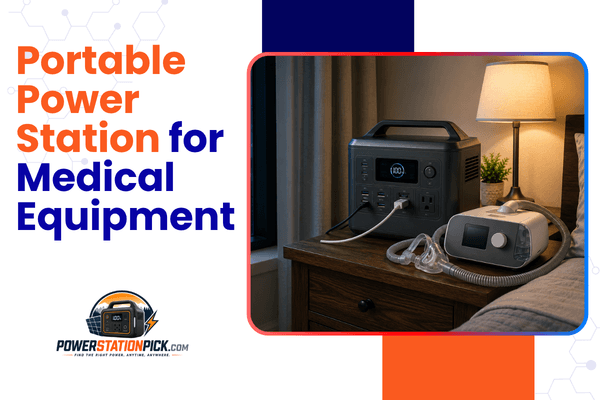
• 500Wh – 1,000Wh: The sweet spot for Vanlife, CPAP machines, and mini-fridges.
• 1,500Wh – 2,000Wh: Ideal for home power outages (runs a full-size fridge, TV, and lights).
• 3,000Wh+: True off-grid living, running high-draw appliances like AC units and microwaves.
Introduction: The “Goldilocks” Dilemma of Power Stations
If you are asking, “What size portable power station do I need?” you are not alone. In 2026, the market is flooded with hundreds of models from brands like EcoFlow, Bluetti, and Jackery. Buy one that is too small, and you’ll wake up in the dark with a dead CPAP machine. Buy one that is too large, and you’ve wasted thousands of dollars on a battery that’s too heavy to carry.
Finding the “just right” power station isn’t about guessing; it is about simple math. In this comprehensive guide, we will break down exactly how to calculate your power needs, explain the crucial difference between Watts and Watt-hours, and help you find the perfect unit for your lifestyle.
⚡ 1. The Golden Rule: Watt-Hours (Wh) vs. Watts (W)
Before you look at a single product, you must understand the two most important terms in the portable power industry. Many beginners confuse them, which leads to buying the wrong equipment.
- Watts (W) = The Engine: This is the output power the station can deliver at one time. If you want to run a 1000W coffee maker, your power station’s inverter must be rated for at least 1000W.
- Watt-Hours (Wh) = The Gas Tank: This is the battery capacity or how long the station can run your devices. A 1000Wh battery can run a 1000W device for exactly 1 hour, or a 100W device for 10 hours.
The Rule of Thumb: When sizing a power station, always calculate your required Watt-Hours (Wh) first, and then ensure the Watts (W) rating is high enough to start your heaviest appliance.
🧮 2. Step-by-Step: How to Calculate Your Exact Power Needs
Do not rely on manufacturer estimates. To get an accurate size, you need to audit your own devices. Follow this 4-step process:
Step 1: List Your Essential Devices
Write down every device you absolutely must power during an outage or camping trip.
Step 2: Find the Wattage
Look at the power brick or the sticker on the back of your appliances. You are looking for the “W” (Watts) number. (If it only lists Volts and Amps, multiply them: 120V x 2A = 240W).
Step 3: Estimate Your Daily Runtime
How many hours per day will you run each device? Multiply the Watts by the Hours to get the Watt-Hours (Wh) needed per day.
- Example: 50W CPAP machine x 8 hours of sleep = 400Wh.
- Example: 150W Mini-Fridge x 10 hours (compressor running time) = 1,500Wh.
Step 4: Add the 20% “Inverter Tax” (Crucial!)
Portable power stations use an inverter to change DC battery power into AC wall power. This process loses about 15% to 20% of the energy as heat. If your math says you need 1,000Wh a day, you actually need a 1,200Wh power station to compensate for inverter inefficiency.
Want to skip the manual math? > 👉 [Click here to use our Free Portable Power Station Calculator] to get your exact runtime in seconds!
🏕️ 3. Sizing Tiers: Which Category Fits Your Lifestyle?
To make shopping easier, the industry generally divides portable power stations into four distinct size categories.
Tier 1: Small (100Wh to 300Wh) – The Weekend Warrior
These units are essentially massive power banks. They weigh under 10 pounds and are easy to throw into a backpack.
- What it runs: Smartphones (20+ charges), Laptops (3-5 charges), Drones, GoPros, and LED camp lights.
- What it CANNOT run: Anything with a heating element or a motor (no coffee makers, no heaters, no fridges).
- Best For: Tent camping, remote photography, and keeping your laptop alive during a flight.
- Top 2026 Picks: Jackery Explorer 300 Plus, Bluetti EB3A.
Tier 2: Medium (500Wh to 1,000Wh) – The Vanlife Standard
This is the most popular category. Weighing between 15 and 25 pounds, these units strike the perfect balance between portability and real power.
- What it runs: CPAP machines (for 1-2 nights), 12V car refrigerators, TVs, Starlink satellite dishes, and electric blankets.
- Best For: Overlanding, Vanlife, tailgating, and targeted home backup (keeping the internet router and a CPAP running during a storm).
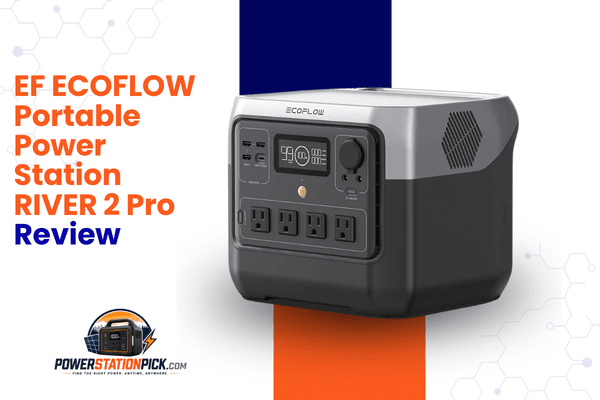
- Top 2026 Picks: EcoFlow River 2 Pro, Anker Solix C800.
Tier 3: Large (1,500Wh to 2,000Wh) – The Home Backup Hero
When the grid goes down, this is what you want. These units are heavy (40 to 60 pounds) but pack serious output power (usually 2000W+ inverters).
- What it runs: Full-size home refrigerators (for 12-24 hours), microwaves, hair dryers, circular saws, and window AC units (for a short time).
- Best For: Florida hurricane prep, California rolling blackouts, RV owners, and mobile construction sites.
- Top 2026 Picks: Bluetti AC200L, EcoFlow Delta 2 Max.
Tier 4: Massive (3,000Wh to 6,000Wh+) – The Off-Grid Cabin
These aren’t meant to be carried; they usually have wheels. These units are designed to integrate directly into your home’s breaker panel via a transfer switch.
- What it runs: Almost anything in your house, including well pumps, space heaters, and heavy-duty 240V tools.
- Best For: Total off-grid living, tiny homes, and whole-house emergency backup.
⚠️ 4. The “Surge” Wattage Factor: Don’t Get Caught Off Guard
There is a hidden trap when sizing a power station: Surge Watts (also known as Peak Watts).
Devices with electric motors or compressors—like refrigerators, air conditioners, and power tools—require a massive spike of energy just to turn on. A refrigerator that uses 200W while running might require 1,200W for a split second to start the compressor.
If your power station has a 1,000Wh battery but only an 800W inverter (with a 1,000W surge limit), it will shut down immediately when you plug that fridge in. Always check the “Surge” or “Peak” rating of the power station before buying for heavy appliances.
☀️ 5. Don’t Forget the Recharge Rate!
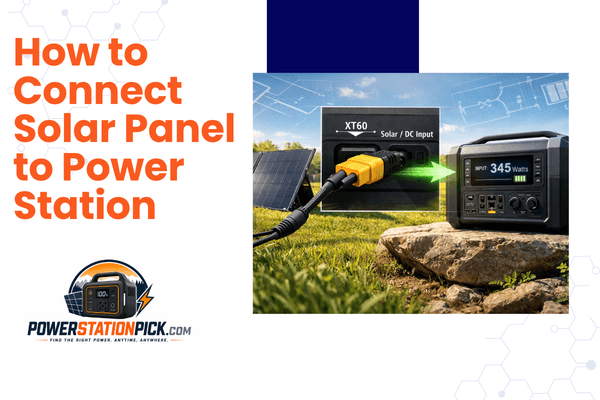
A massive 3,000Wh battery is useless if it takes 24 hours to charge. When sizing your station, look at the Maximum Solar Input and AC Wall Input.
If you are using your station for extended home backup or Vanlife, you need it to charge fast when the sun comes out.
- Slow Charging: Max 200W solar input (takes 10+ hours to charge a 2000Wh station).
- Fast Charging (2026 Standard): Max 800W – 1200W solar input (charges a 2000Wh station in under 3 hours).
(Not sure how solar charging works? Read our guide on [LiFePO4 Battery Chemistry and Solar Charging Efficiency] here).
❓ FAQ: Sizing Questions We Hear All the Time
Q: What size power station do I need for a CPAP machine?
A: To run a CPAP machine for a full 8 hours with the heated humidifier turned off, you need a minimum of 300Wh. If you use the heated hose and humidifier, your CPAP will draw up to 90W an hour, meaning you need at least a 1,000Wh station to comfortably get through the night without draining the battery to zero.
Q: Can a portable power station run a space heater?
A: Yes, but not for long. Most space heaters pull 1,500 Watts. Even on a massive 2,000Wh power station, a space heater will completely drain the battery in about 1 hour and 15 minutes. Power stations are better suited for electric blankets, which only draw about 50W to 100W.
Q: Is it better to buy one large power station or two smaller ones?
A: For home backup, one large unit (2000Wh+) is generally more cost-effective and can handle high-surge appliances. However, for camping and modularity, buying a 1000Wh station and an expansion battery is a highly popular choice in 2026, allowing you to leave the extra weight behind when you don’t need it.
🏆 Final Verdict: How to Choose Today
Still not sure what size portable power station you need? Here is our expert rule of thumb for 2026:
- Buy 300Wh if you just need to charge laptops and phones.
- Buy 1,000Wh if you are going camping, driving an RV, or use a CPAP.
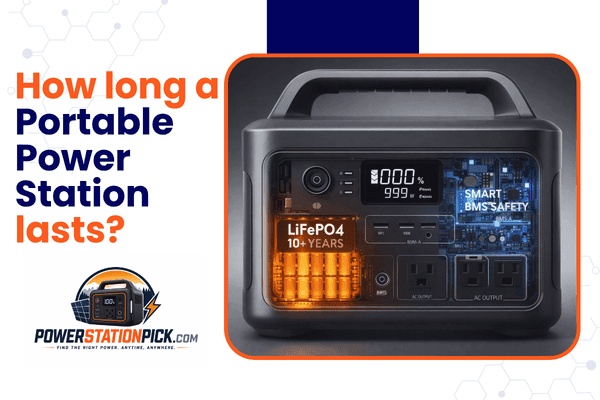
- Buy 2,000Wh (LiFePO4) if you want peace of mind during a home power outage to keep your fridge cold and your family comfortable.
Ready to find your exact match? Head over to our [Reviews Section] to see which brands dominate the market this year!
Authored by: PowerStationPick Editorial Team Disclaimer: Power needs vary. Always check your specific appliance labels before relying on them in an emergency.

Hi, I’m Andrew Richards. I created PowerStationPick to share what I’ve learned about portable power through real-world use—what actually works, what doesn’t, and what makes sense for different situations. I focus on helping you choose the right setup for home backup, camping, and everyday needs without overcomplicating things.