How Long Does a Portable Power Station Last? (Lifespan & Runtime Explained)
🔍 QUICK ANSWER
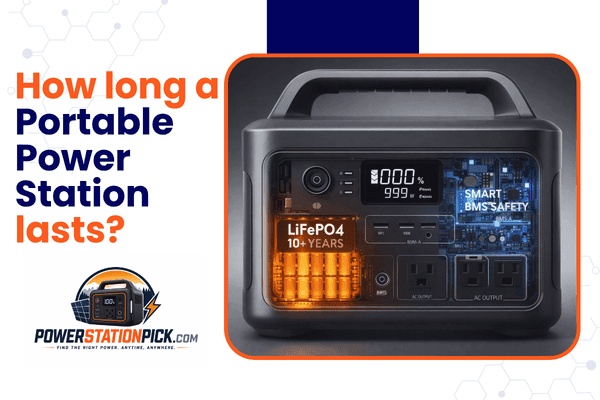
A portable power station lasts 5 to 15 years depending on its battery chemistry. LiFePO4 (LFP) models are the gold standard, lasting 10+ years (3,000+ cycles), while Lithium-ion (NMC) models typically last 3-5 years. On a single charge, a 1000Wh unit can power a laptop for 15+ hours or a refrigerator for 12-18 hours. To maximize lifespan, keep the battery charged between 20% and 80%.
Introduction
If you’re considering buying a portable power station, the most critical question is: How long will it actually last? The answer isn’t a single number. It depends on two distinct factors that users often confuse:
- Battery Lifespan: How many years before the unit degrades and needs replacement?
- Runtime per Charge: How many hours can it power your specific devices during a blackout or camping trip?
In this 2026 ultimate guide, we’ll break down both in technical detail so you can protect your investment.
🔋 1. Battery Lifespan: How Many Years Does It Last?
The lifespan of a power station is measured in Charge Cycles. One cycle equals discharging the battery from 100% to 0% and recharging it back to 100%.
Important: When a unit reaches its rated cycles (e.g., 3,000 cycles), it doesn’t stop working. It simply means the battery capacity has dropped to about 80% of its original health.
Comparison: NMC vs. LiFePO4 (The Tech That Matters)
| Feature | Lithium-ion (NMC) | LiFePO4 (Lithium Iron Phosphate) |
| Typical Cycles | 500 – 1,000 Cycles | 3,000 – 4,500+ Cycles |
| Estimated Years | 3 – 5 Years | 10 – 15+ Years |
| Stability | Standard | Excellent (Thermal Stability) |
| Best For | Ultra-lightweight / Occasional use | Daily use / Home Backup / Off-grid |
Why LiFePO4 is the 2026 Winner: While NMC batteries are lighter, LiFePO4 cells (used by brands like EcoFlow, Bluetti, and Jackery v2) are chemically much more stable, making them safer and significantly longer-lasting.
⏱️ 2. Runtime: How Long Does It Last Per Charge?
The “Efficiency-Adjusted” Formula
Don’t just divide capacity by wattage. Internal components like the Inverter and BMS consume power just to stay on, creating “efficiency loss” (usually 15-20%).
Standard Formula: Runtime (Hours) = (Capacity Wh × 0.85) / Device Watts (W)
Real-World Runtime Examples (1000Wh Station)
| Device | Power Draw | Estimated Runtime |
| Smartphone | 10W | 85 – 90 Charges |
| Laptop (MacBook Pro) | 60W | 14 – 16 Hours |
| Starlink Standard | 60W | 13 – 14 Hours |
| CPAP Machine | 40W | 20+ Hours |
| Energy Star Fridge | 120W (Avg) | 12 – 18 Hours |
| Space Heater | 1500W | ~35 Minutes |
3. Critical Components: What Fails First?
A power station is more than just a battery; it’s an ecosystem of electronics.
- The Inverter: Converts DC to AC. High-quality Pure Sine Wave inverters last longer and protect your appliances.
- The BMS (Battery Management System): This is the “brain.” If the BMS software glitches or its sensors fail due to moisture, the entire unit stops working even if the battery cells are healthy.
- Cooling Fans: If dust clogs the fans, the unit overheats, which is the #1 killer of battery lifespan.
4. Environmental Impact on Longevity
- Heat (>95°F): High temperatures accelerate the chemical breakdown inside the cells. Storing your unit in a hot garage can cut its life in half.
- Cold (<32°F): Batteries become sluggish in the cold. You may see a 25% drop in runtime during winter camping.
- Humidity: Corrosion on ports can lead to short circuits. Always store in a dry place.
5. Solar Charging: Extending Runtime Indefinitely
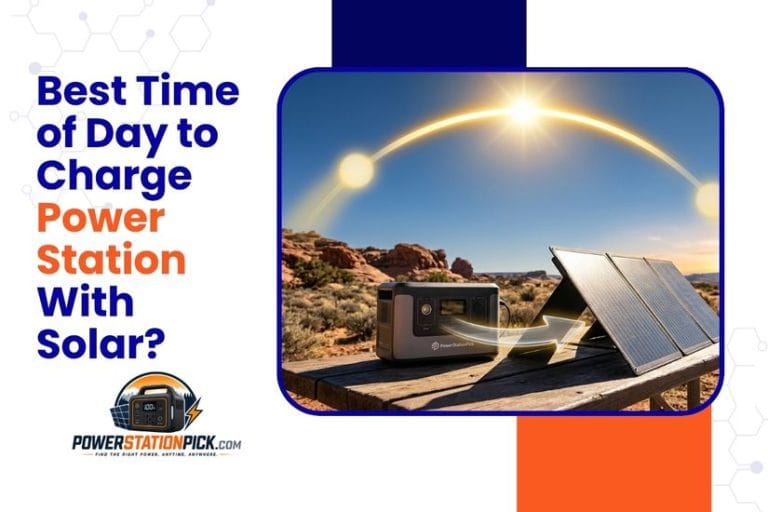
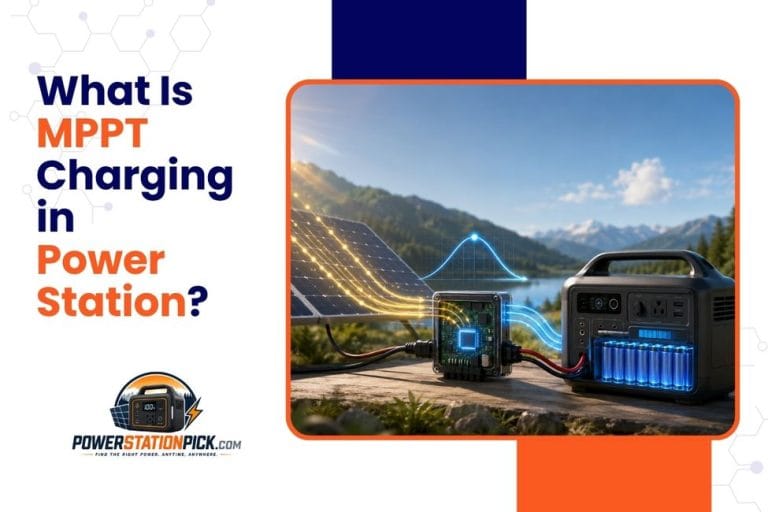
Solar panels are a game-changer. With enough sunlight and the right MPPT controller (built into most modern units), you can achieve “Pass-through Charging.”
- Daylight: Solar panels power your Starlink/Fridge and charge the battery.
- Nighttime: You run off the stored energy.
- Result: You can stay off-grid indefinitely if your solar input exceeds your daily consumption.
6. How to Make Your Power Station Last 10+ Years
- The 20/80 Rule: Avoid keeping your battery at 100% or 0% for long periods. Keeping it between 20% and 80% is the “sweet spot” for lithium chemistry.
- Store at 50%: If you aren’t using the unit for a few months, charge it to 50-60% and check it every 3 months.
- Use DC Ports: Whenever possible, use USB-C or 12V DC ports. This bypasses the inverter, saving 15% of your energy.
- Firmware Updates: Always connect your unit to the brand’s app. Manufacturers release updates that optimize charging algorithms and extend battery life.
Power Station vs. Gas Generator Lifespan
| Feature | Portable Power Station | Gas Generator |
| Lifespan | 5 – 15 Years | 5 – 20 Years (if maintained) |
| Maintenance | Zero (Software only) | High (Oil, spark plugs, carb) |
| Fuel | Free (Sun/Grid) | Expensive (Gas/Propane) |
| Operation | Silent & Safe Indoors | Loud & Dangerous Fumes |
Related article : How Does a Portable Power Station Work?
❓ FAQ (Schema Optimized)
Q: Can I use my power station every day?
A: Yes, especially if it’s a LiFePO4 model. These are designed for daily cycling (up to 10 years of daily use).
Q: Do portable power stations lose capacity over time?
A: Yes, all lithium batteries degrade. However, a high-quality unit will only lose about 20% of its capacity after 3,000+ cycles.
Q: Is it safe to leave it plugged in all the time?
A: Modern stations have “Bypass Mode” which is safe. However, to maximize battery chemistry, it’s best to unplug once fully charged unless you are using it as a UPS.
🏆 Final Thoughts
How long does a portable power station last?
- In years: 3-5 years (NMC) or 10-15 years (LiFePO4).
- In hours: It depends on your gear, but a 1000Wh unit is generally enough for a full day of remote work or emergency backup.
For the best long-term investment, always prioritize LiFePO4 models and keep your firmware updated.

Hi, I’m Andrew Richards. I created PowerStationPick to share what I’ve learned about portable power through real-world use—what actually works, what doesn’t, and what makes sense for different situations. I focus on helping you choose the right setup for home backup, camping, and everyday needs without overcomplicating things.