Best Emergency Power Supply for Power Outages
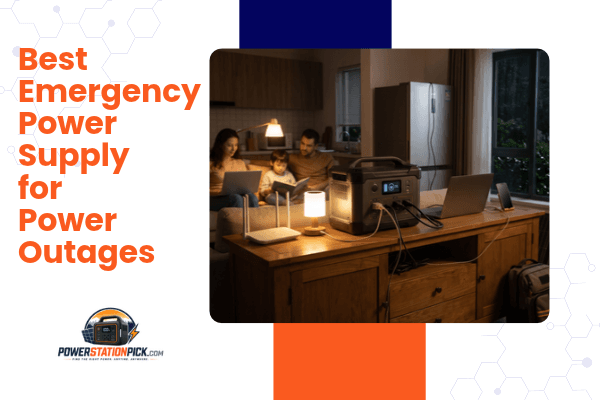
The weather alert goes out two days before the storm is supposed to hit. By the time it actually does, the shelves at the hardware store are empty, the batteries are gone, and everyone’s scrambling for the same handful of generators nobody wanted to buy last month. The households that stay comfortable through the outage that follows aren’t the ones who got lucky — they’re the ones who put together an emergency power supply before they needed one.
“Emergency power supply” means more than just one product. It’s a small system: something that stores real electricity, something that can recharge it, and a few supporting pieces that make the difference between an inconvenient evening and a genuinely rough few days. This guide walks through what that system should actually include, and which portable power stations make the strongest core of it.
The core of a modern emergency power supply is a LiFePO4 portable power station sized to your essential loads — typically 500–1,000Wh for an apartment or short outage, 1,000–2,500Wh if you need to run a refrigerator and medical equipment, and 2,500Wh+ if outages in your area regularly stretch past a day.
Around that core, a complete kit adds a way to recharge without grid power (solar panels), basic lighting and communication tools that don’t depend on the power station at all, and a habit of testing and maintaining the system before severe weather season — not after the forecast turns bad.
For a full breakdown of specific models by outage length and load, see our Best Portable Power Station for Power Outage comparison; this guide focuses on building the complete kit around that choice.
What Actually Counts as an “Emergency Power Supply”?
The term gets used loosely, so it’s worth being specific. A real emergency power supply setup generally includes:
- A portable power station — the core battery and inverter system that actually runs your devices
- A charging method independent of the grid — solar panels, since the whole point of emergency power is not depending entirely on the thing that just failed
- Low-draw essentials that don’t need the power station at all — battery or hand-crank flashlights, a NOAA weather radio, and spare batteries, so your power station’s capacity goes toward higher-value loads
- Cables and adapters matched to your specific devices — the time to discover you need a different cable is not during the outage
A gas generator can fill some of this role too, and for sustained, very high continuous loads it often has real advantages — we cover that tradeoff in depth in our Portable Power Station vs. Gas Generator comparison. This guide focuses specifically on the battery-based approach, which has become the more common starting point for most households because of its quieter operation, indoor-adjacent flexibility, and solar rechargeability.
Why a Portable Power Station Is the Right Core for Most Households
A portable power station solves the two biggest failures of ad-hoc emergency power: it doesn’t run out of fuel you forgot to stock up on, and it doesn’t require you to run an extension cord from something loud and exhaust-producing sitting outside a window. LiFePO4 battery chemistry specifically is worth prioritizing for this use case — it tolerates sitting at a partial charge in storage for months at a time far better than older lithium-ion packs, which matters enormously for a device that might spend 11 months a year untouched before you need it on night one of an outage. Our full comparison in Lithium-ion vs. LiFePO4 covers why this distinction matters more for emergency-use equipment than for daily-use electronics.
If you’re still weighing whether this category of product is worth the investment at all versus other options, our broader breakdown in Are Portable Power Stations Worth It? and Portable Power Station Pros and Cons lays out the honest tradeoffs.
Sizing Your Emergency Power Supply
Rather than repeat the full capacity-sizing breakdown here, our Best Portable Power Station for Power Outage guide covers this in depth, including a runtime calculator and a dedicated breakdown of what different capacity tiers can realistically support. The short version:
| Household Situation | Capacity Tier |
|---|---|
| Apartment, short outages, phones/Wi-Fi/lights | 500–1,000Wh |
| Refrigerator + essentials, occasional longer outages | 1,000–2,500Wh |
| Outages regularly exceeding a day, medical equipment | 2,500–4,000Wh+ |
| Multi-day resilience, selected home-circuit backup | 4,000Wh+, expandable |
If you have specific medical equipment that must stay powered, our dedicated Medical Equipment power backup guide and Best Silent Power Station for CPAP Machine cover sizing for that specific priority.
Top Picks for an Emergency Power Kit
An emergency kit has a slightly different priority list than a general home-backup purchase: you want something that’s ready to grab, charges back up fast between outages, and doesn’t demand you build a whole home-integration project around it. These three, all reviewed in depth on this site, fit that brief well:
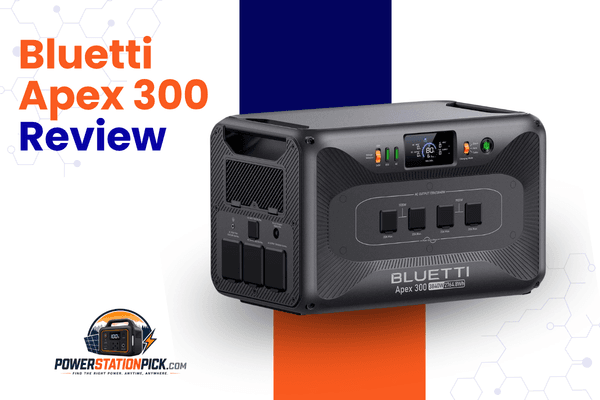
For a lean, grab-and-go kit: The Bluetti AC70P recharges in about an hour with no setup required, which matters if you’re topping it off during brief windows of restored power between rolling outages.
For a balanced all-rounder that also earns its keep outside emergencies: The Jackery Explorer 1000 V2 covers a refrigerator and essentials comfortably and doubles as a capable camping or travel unit the other 11 months of the year — a real consideration, since emergency-only equipment is easy to forget about until it’s needed.
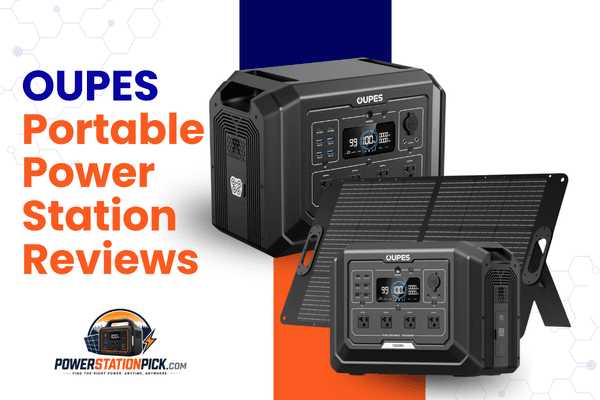
For maximum capacity per dollar if your kit needs to cover more ground: The OUPES Exodus 2400 delivers 2,232Wh and genuine 2,400W output at a price that regularly beats units with half its capacity.
For the full tiered comparison across outage lengths — including units built specifically for multi-day and whole-home-oriented backup — see the complete Best Portable Power Station for Power Outage breakdown, and the full spec-by-spec view in our Portable Power Station Comparison Chart 2026.
Don’t Skip Solar — It’s What Turns a Battery Into a System
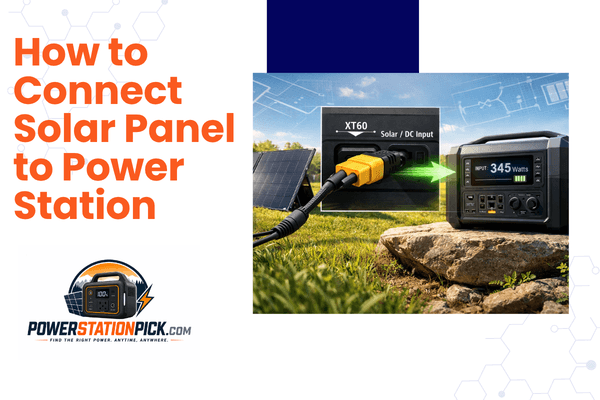
A power station alone is just a battery with a finite charge. What makes it a genuine emergency system is a way to recharge it without grid power, and for most households that means solar. The practical reality is that real-world solar charging takes longer than the ideal-conditions math on the box suggests — weather, panel angle, and available daylight hours all cut into it — so it’s worth sizing panel wattage with a buffer rather than the bare minimum. Our guides on How to Connect Solar Panel to Power Station, What Is MPPT Charging in Power Station?, and Best Time of Day to Charge Power Station With Solar cover the setup details worth getting right before you need them.
The Non-Power-Station Essentials Your Kit Still Needs
A good emergency power supply setup isn’t just the power station — it’s designed so the power station’s limited capacity goes toward things that actually need real electricity, while cheaper, lower-draw tools cover the rest:
- A battery or hand-crank flashlight per household member — don’t spend power-station capacity lighting a room you could light with a $10 flashlight
- A NOAA weather radio — many run on AA batteries or a hand crank, keeping you informed without touching your power station’s reserve
- Spare AA/AAA batteries, stored separately from the devices that use them
- A phone charging cable for every device, stored with the kit rather than scattered around the house — this sounds obvious and is still the most common thing people forget
- A paper list of your essential devices and their wattage, so you’re not trying to remember or look up appliance specs by phone light during the actual outage
Keeping Your Emergency Power Supply Ready Year-Round
The worst time to discover your power station won’t hold a charge is the first night of an outage. A few habits make the difference:
- Test it before severe weather season, not after the first warning. A quarterly check — power it on, confirm it holds charge, verify your cables still fit your current devices — takes ten minutes and catches problems while you still have options.
- Follow the manufacturer’s storage charge-level guidance. Most LiFePO4 units handle long-term storage well, but check your specific model’s recommendations rather than assuming indefinite shelf life at any charge percentage.
- Keep it somewhere you can actually reach quickly and that meets the manufacturer’s placement and ventilation guidance — not buried in the back of a closet behind things you’d need to move during an actual emergency. For placement specifics, see Are Portable Power Stations Safe Indoors?.
- Watch for signs of a problem before they become one. If you notice unusual heat, swelling, or the unit struggling to hold a charge it used to hold fine, don’t wait for an emergency to find out it’s failed — see Portable Power Station Overheating: What to Do if you ever notice warning signs.
Frequently Asked Questions
What’s the difference between an emergency power supply and a regular portable power station? They’re often the same physical product — the difference is in how you build the kit around it. An emergency power supply setup specifically plans for recharging without grid power (solar), includes low-draw backup tools that preserve the power station’s capacity for higher-value loads, and gets tested regularly so it’s ready when needed rather than purchased and forgotten.
How much should I spend on an emergency power supply? It scales with your household’s essential loads, not a fixed budget. A phone-and-lights kit for an apartment can be built around a sub-$300 unit; a refrigerator-and-medical-equipment kit typically needs a $500–1,500 unit in the 1,000–2,500Wh range. See our Best Portable Power Station for Power Outage guide for specific models at each tier.
Is a portable power station enough, or do I also need a generator? For most households dealing with outages measured in hours to a few days, a well-sized portable power station with solar backup covers the need without fuel storage or exhaust concerns. For sustained, very high continuous loads over many days, a generator may still make sense as a complement — see our Portable Power Station vs. Gas Generator comparison for the full tradeoff.
How often should I test my emergency power supply? A quarterly check is a reasonable habit for most households, with an additional check specifically before your region’s severe weather season (hurricane season, winter storm season, etc.) rather than relying on the quarterly schedule alone to catch a problem right before you need it.
Can I keep my power station charging constantly as a standby UPS? Many modern units support pass-through or UPS-style operation, but the correct long-term charging behavior varies by manufacturer — check your specific model’s guidance rather than assuming every unit handles continuous trickle charging identically.
Final Verdict
An emergency power supply is a system, not a single purchase — a correctly sized portable power station at the center, a solar charging method around it, and a few low-draw tools that keep your battery’s capacity focused on what actually needs it. Build the kit before the forecast turns bad, test it on a schedule rather than hoping it still works, and size the core power station to your actual essential loads using our Power Outage comparison guide rather than guessing. The households that stay comfortable through the next outage are the ones who did this groundwork while the hardware store shelves were still full.

Hi, I’m Andrew Richards. I created PowerStationPick to share what I’ve learned about portable power through real-world use—what actually works, what doesn’t, and what makes sense for different situations. I focus on helping you choose the right setup for home backup, camping, and everyday needs without overcomplicating things.