Best Cheapest Portable Power Station
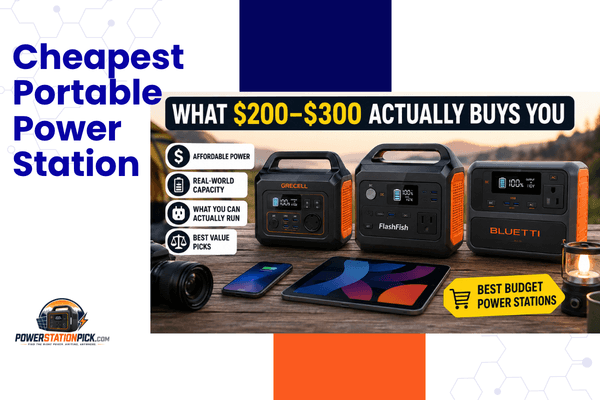
“Cheapest” and “best value” aren’t the same search, even though people use them interchangeably. The genuinely cheapest portable power stations on the market are barely more than an oversized phone charger — fine for a weekend of device charging, useless the moment you plug in anything with a compressor or a heating element. The real question worth answering isn’t “what’s the lowest price,” it’s “what’s the least I can spend and still get a unit that won’t disappoint me the first time I actually need it.”
We looked at what’s currently ranking and recommended across the major review sites for this exact question, cross-checked the specs each one is actually built around, and pulled it together into one honest picture of what your money buys at each price point under $300.
🔍 Quick Answer
The genuinely cheapest usable portable power stations sit in the $150–$300 range with roughly 250–300Wh of capacity and 300–600W of output — enough for phones, laptops, small fans, and a few hours of light backup, but not a fridge or a microwave.
Across the current top-ranking reviews, the Bluetti Elite 30 V2 (288Wh, 600W, ~$199–299) comes out on top in the most head-to-head comparisons we found, consistently outscoring the Anker SOLIX C300 and EcoFlow RIVER 3 in third-party testing.
If your budget can stretch slightly further, a 700–800Wh unit in the $500–600 range buys meaningfully more real-world capability — including our own tested Bluetti AC70P — and is worth the extra spend for most buyers who plan to use the unit for more than just device charging.
What “Cheapest” Actually Gets You: A Reality Check
Before the comparison table, it’s worth being direct about what changes as price drops. Capacity and output scale roughly with price in this category — there’s no secret budget unit that matches a $600 power station’s real-world capability. What you’re trading away as the price drops from $600 to $200 is:
- Capacity drops from ~700–800Wh to ~250–300Wh (roughly a third)
- Output drops from ~1,000W to ~300–600W, ruling out microwaves, space heaters, and most kitchen appliances
- Port count and features shrink — fewer AC outlets, sometimes no AC inverter at all (DC-only models)
- Expansion options disappear — budget units are rarely designed to accept add-on batteries
None of that makes a budget unit a bad purchase — it just means matching expectations to price matters more here than almost anywhere else in this category. If you’re not sure what capacity your actual use case needs before comparing prices, our sizing calculator is worth running first.
| Model | Capacity | Output | Weight | AC Charge Time | Typical Price | Best For |
|---|---|---|---|---|---|---|
| Bluetti Elite 30 V2 | 288Wh | 600W (1,500W lifting) | 9.5 lbs | 80% in 45 min | $189–$299 | Best overall budget pick — wins most head-to-head comparisons |
| Anker SOLIX C300 | 288Wh | 300W | ~7 lbs | 80% in 50 min | ~$200–$260 | Quietest option (25dB) and fastest USB-C charging |
| Anker SOLIX C300X | 288Wh | ~600W | ~8 lbs | ~50 min to 80% | ~$200–$299 | Longest warranty in this price bracket |
| EcoFlow RIVER 3 | 245Wh | 300W | ~7.7 lbs | ~1 hour | ~$150–$200 | Absolute cheapest usable option; phones/tablets only |
| EcoFlow RIVER 3 Plus | 286Wh (expandable to 858Wh) | ~300–600W | ~9 lbs | ~1 hour | ~$250–$300 | Only budget unit with real expansion capability |
| Bluetti EB3A | 268Wh | ~600W | 10.1 lbs | ~40 min to 80% | ~$200–$250 | Wireless charging pad, UPS mode, app control |
| Anker SOLIX C300 DC | 288Wh | DC only (no AC inverter) | ~7 lbs | ~50 min | ~$249 | USB-C/DC-only use — not a full “power station” |
| AllPowers P300 | 256Wh | 300W (600W surge) | ~7 lbs | ~1–1.5 hours | Under $150 | Absolute floor of the category |
Top 6 Best Cheapest Power Station
1. BLUETTI Elite 30 V2 Portable Power — The Consensus Pick

BLUETTI Elite 30 V2 Portable Power Station 288Wh 600W LFP Solar Generator | Power Lifting 1500W, 10ms UPS, 45 Min 0-80% Fast Charging, Emergency Backup Power for Blackout, Camping, Outage and Road Trip
Across several independent multi-way comparisons we reviewed, the Elite 30 V2 consistently scored highest against the Anker SOLIX C300 and EcoFlow RIVER 3 — winning on power output and port count in head-to-head scoring from Solar Waypoint's comparison tool (72–73/100), and getting singled out as a top budget pick by TechRadar. At 288Wh, 600W (1,500W in Power Lifting mode), and 9.5 lbs, it's the rare budget unit that doesn't feel like it's cutting corners to hit its price — nine total ports, a genuinely fast 45-minute charge to 80%, and quiet under-30dB operation in independent testing
Check Price on AmazonKey Features
- 288Wh capacity with 600W output for versatile power needs.
- Fast charging from 0-80% in just 45 minutes.
- 10ms UPS functionality for seamless power transitions.
- Lightweight and portable design for easy transport.
- Ideal for camping, road trips, and emergency situations.
Pros
- Highest output in its weight class, fast TurboBoost charging, quiet operation, low standby drain (4.5W).
Cons
- At 30dB it's slightly louder than the Anker C300 (25dB) under light loads; two AC outlets is fewer than some competitors offer.
Specs
| 0 | 288Wh |
|---|---|
| 1 | 600W |
| 2 | 45 minutes (0-80%) |
| 3 | 10ms |
| 4 | Lightweight and portable |
2. Anker SOLIX C300 DC Portable Power
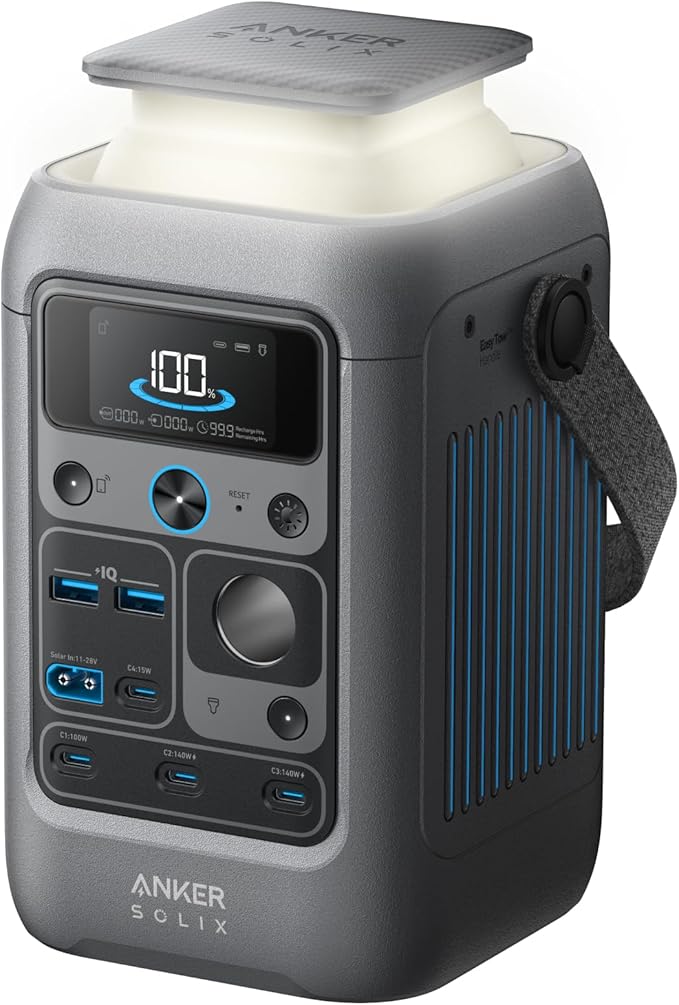
Anker SOLIX C300 DC Portable Power Station, 288Wh, 300W, Outdoor Camping | 288Wh LiFePO4 Battery, 300W Solar Generator for UPS, Travel, and Emergency Use (No Wall Charger Included)
Matching the Elite 30 V2's 288Wh capacity but with half the AC output (300W vs. 600W), the C300 trades raw power for two specific advantages independent testing confirmed: it's measurably quieter (25dB vs. 30dB) and charges laptops faster thanks to dual 140W USB-C PD ports, letting it fast-charge two 16-inch MacBook Pros simultaneously. It also edges out the Elite 30 V2 with three AC outlets to two, though the tradeoff is a noticeably lower power ceiling.
Check Price on AmazonKey Features
- 288Wh LiFePO4 battery for long-lasting energy.
- 300W solar generator capability for eco-friendly charging.
- Compact design ideal for camping and outdoor use.
- Multiple output ports for various devices.
- Lightweight and portable for easy transport.
Pros
- Quietest unit in this comparison, best-in-class USB-C charging speed, one extra AC outlet.
Cons
- 300W output is half the Elite 30 V2's — rules out anything beyond light electronics.
Specs
| 0 | 288Wh |
|---|---|
| 1 | 300W |
| 2 | Lightweight |
| 3 | Solar and DC |
| 4 | Multiple outputs |
3. Anker SOLIX C300 DC Portable Power
Anker SOLIX C300 DC Portable Power Station, 288Wh, 300W, Outdoor Camping | 288Wh LiFePO4 Battery, 300W Solar Generator for UPS, Travel, and Emergency Use (No Wall Charger Included)
Matching the Elite 30 V2 on capacity, the C300X's main edge is Anker's warranty coverage, which one independent budget roundup specifically flagged as the longest in the sub-$500 category. If brand ecosystem and long-term support matter more to you than winning every head-to-head spec comparison, this is a reasonable alternative pick
Check Price on AmazonKey Features
- 288Wh LiFePO4 battery for long-lasting energy.
- 300W output, perfect for various devices.
- Lightweight and portable design for easy transport.
- Ideal for camping, travel, and emergency situations.
- Solar generator compatible for sustainable charging.
Pros
- Strongest warranty terms in the budget tier, matches Elite 30 V2 on capacity.
Cons
- Doesn't clearly beat the Elite 30 V2 on any single performance metric — the case for choosing it is warranty and brand trust, not raw specs.
Specs
| 0 | 288Wh |
|---|---|
| 1 | 300W |
| 2 | Lightweight |
| 3 | Solar charging |
| 4 | Camping, travel, emergency |
At a Glance
4. EF ECOFLOW Portable Power Station RIVER

EF ECOFLOW Portable Power Station RIVER 3, 245W 550W | 1 Hr Fast Charging, LiFePO4 Battery,X-Boost 600W Solar Generator for Outdoor Camping/RVs/Home Use
If "cheapest" genuinely means lowest possible price rather than best value, the RIVER 3 is close to the real floor of a usable lithium unit — under 8 lbs, a 245Wh battery, and a 300W inverter. It's explicitly built for phones, tablets, and short bursts of backup power, not appliances. Reviewers have been consistent that this is a first-purchase or backup-to-your-backup unit, not a primary power source.
Check Price on AmazonKey Features
- Fast charging in just 1 hour.
- Equipped with a durable LiFePO4 battery.
- X-Boost technology supports devices up to 600W.
- Ideal for camping, RVs, and home backup.
- Compact and lightweight design for easy transport.
Pros
- Lowest price of any unit worth buying, genuinely lightweight, backed by 3,000+ cycle LFP battery.
Cons
- 300W ceiling is the most limiting in this entire list; no meaningful appliance capability.
Specs
| 0 | 256Wh |
|---|---|
| 1 | 600W (X-Boost) |
| 2 | LiFePO4 |
| 3 | 1 hour |
| 4 | 11 lbs |
At a Glance
5. EF ECOFLOW Portable Power Station River

EF ECOFLOW Portable Power Station River 3 Plus, 286Wh 760W | 1 Hr Fast Charging, LFP Battery,
This is the one genuinely unusual find in the budget tier: while every other unit on this list is a fixed-capacity purchase, the RIVER 3 Plus starts at 286Wh and can expand to 858Wh with an external battery pack — a capability independent reviewers specifically called rare in this price segment. If you're buying budget now but suspect you'll want more capacity later, this is the one option here that doesn't force a full re-purchase to get there.
Check Price on AmazonKey Features
- 286Wh capacity with 760W output for versatile power needs.
- Fast charging in just 1 hour for quick energy replenishment.
- LFP battery technology for enhanced safety and longevity.
- Expandable up to 858Wh, accommodating larger power demands.
- Operates at less than 30 dB for a quiet experience.
Pros
- Only budget unit with real expansion capability, protects against outgrowing your purchase.
Cons
- Expansion battery is a separate cost on top of the base unit — budget for both if you plan to use this path.
Specs
| 0 | 286Wh |
|---|---|
| 1 | 760W |
| 2 | 1 Hour |
| 3 | Up to 858Wh |
At a Glance
6. ALLPOWERS VOLIX P300 Portable Power Station,

ALLPOWERS VOLIX P300 Portable Power Station, 256Wh 300W LiFePO4 Battery | AC Fast Charge, UPS Backup, 4000 Charge Cycles, 100W USB-C Solar Generator for Camping RV Emergency Outdoor Gaming Festivals
At under $150, the P300 is the genuine floor of this comparison — a 256Wh LiFePO4 battery with a 300W inverter (600W surge). It won't compete with any other unit here on features or output, but for someone who wants the absolute minimum viable lithium power station, it's a legitimate, safe-chemistry option rather than an unbranded risk.
Check Price on AmazonKey Features
- 256Wh capacity with 300W output for versatile use.
- Fast AC charging capability for quick power replenishment.
- Long-lasting LiFePO4 battery with 4000 charge cycles.
- 100W USB-C solar generator compatibility for eco-friendly charging.
- Ideal for camping, RV trips, and outdoor festivals.
Pros
- Lowest price point of any LiFePO4 unit in this comparison.
Cons
- Fewest features and least brand track record of the units listed here.
Specs
| 0 | 256Wh |
|---|---|
| 1 | 300W |
| 2 | LiFePO4 |
| 3 | 4000 |
| 4 | 100W USB-C |
At a Glance
Which Budget Pick Actually Fits You
Rather than defaulting to “just get the highest-rated one,” match the pick to what you’re actually planning to do with it:
- Want the single best all-around budget unit and don’t want to overthink it? → Bluetti Elite 30 V2. It wins the most head-to-head comparisons for a reason.
- Charging laptops/MacBooks is your main use case and you want it whisper-quiet? → Anker SOLIX C300. The dual 140W USB-C ports and 25dB noise floor are built for exactly this.
- You might need more capacity in a year and don’t want to re-buy from scratch? → EcoFlow RIVER 3 Plus. It’s the only unit here with a real expansion path.
- You just need something for phones and a tablet during travel or a short outage, nothing more? → EcoFlow RIVER 3. Don’t overspend on output you won’t use.
- You want app-based monitoring and don’t mind paying slightly more for features? → Bluetti EB3A.
- You want the lowest possible price and still want LiFePO4 safety? → AllPowers P300.
Real-World Runtime: What 250–300Wh Actually Powers
| Device | Typical Draw | Runtime on a 288Wh Unit |
| Phone charging | ~15W | 15–18 full charges |
| Laptop | ~50–65W | 4–5 hours |
| Wi-Fi router | ~10–15W | 18–24+ hours |
| Small fan | ~40W | 6–7 hours |
| LED lantern/lighting | ~10W | 25+ hours |
| Mini fridge (compressor cycling) | ~40–60W avg | 4–6 hours |
| Microwave (600W+) | 600–900W | Not supported on most sub-300W-output budget units |
The gap in that last row is the whole story of this price tier. A budget unit’s output ceiling — not its capacity — is usually what actually stops you from running anything beyond devices and small electronics. For appliance-specific wattage math across different power station classes, see our guides on Can a Portable Power Station Run a Microwave? and Can a Portable Power Station Run a Space Heater?.
When “Cheapest” Isn’t the Right Question
One theme that came up consistently across the top-ranking reviews we looked at: several outlets specifically frame their true budget pick as a stepping stone, then immediately recommend spending more if your use case includes anything beyond device charging. BackupPowerHub’s budget roundup, for example, includes a 768Wh unit at roughly $599 specifically because their own testing found the jump in real capability — a 12–14 hour fridge run, a functional (if brief) microwave test, powering a space heater for 45 minutes — was worth stepping outside the strict “under $500” budget for.
That pattern matches our own findings. If your use case is genuinely just phones, a laptop, and some lights during a short outage, a $200–300 unit is the right amount of money to spend — anything more is paying for capability you won’t use. But if you’re picturing a fridge, a CPAP machine overnight, or any kitchen appliance, the math stops favoring the cheapest option fast. Our own tested Bluetti AC70P sits in that next tier (768Wh, 1,000W output, ~$499–599) and is a reasonable target if you can stretch the budget. For a full breakdown of how capacity tiers map to real use cases, see Different Types of Portable Power Stations, and for a side-by-side of every model we’ve reviewed across price points, the Portable Power Station Comparison Chart 2026 is the fastest way to compare.
A Word on Battery Chemistry at This Price Point
Nearly every budget unit worth buying in 2026 — every model in the table above — uses LiFePO4 (LFP) chemistry rather than older lithium-ion. This matters more at the budget end of the market than people expect, because LFP’s safety and longevity advantages are exactly what separates a legitimately cheap unit from a genuinely risky one. Our full breakdown in Lithium-ion vs. LiFePO4 covers why this distinction is worth checking before you buy an off-brand unit purely because it’s the lowest price you can find — a battery advertised well below the prices in this guide is worth a second look at its chemistry and cycle rating before assuming it’s simply a better deal.
Is It Worth Buying the Absolute Cheapest Option?
Worth asking directly, since it’s the question behind this whole search: is a portable power station worth it at all if you’re only willing to spend the bare minimum? For light, occasional use — camping device charging, a backup for short outages, keeping a phone alive during travel — yes, a $150–250 unit is a legitimately good purchase and not a compromise. Our broader take on the category’s value proposition is covered in Are Portable Power Stations Worth It? if you’re still deciding whether to buy anything in this category at all.
Frequently Asked Questions
What is the cheapest portable power station you can actually rely on?
Among currently ranking budget picks, the Bluetti Elite 30 V2 (288Wh, 600W, typically $199–299) comes out on top in the most independent head-to-head comparisons, offering the best balance of price and real capability rather than being simply the lowest price available.
Is it worth buying the absolute cheapest power station on Amazon?
Only if it uses LiFePO4 chemistry from a recognizable brand — an unusually low price on an unfamiliar brand is a signal to check the battery chemistry and cycle rating before buying, not just a good deal.
What’s the difference between a $200 power station and a $600 one?
Roughly triple the capacity (250–300Wh vs. 700–800Wh) and often double-to-triple the continuous output (300–600W vs. 1,000W+) — the $600 tier can run a fridge or briefly run a microwave, while the $200 tier is built for devices and small electronics only.
Can a budget power station run a mini fridge?
Some can for a limited time — a 288Wh unit can typically sustain a small compressor fridge for 4–6 hours, but it won’t get you through an overnight outage without recharging.
What should I check before buying the cheapest option I find?
Battery chemistry (LiFePO4 over lithium-ion), continuous output rating (not just capacity), and whether the brand has an established warranty and return policy — these matter more than shaving another $20–30 off an already-low price.
Is a DC-only unit like the Anker SOLIX C300 DC actually a “power station”?
Technically it lacks a built-in AC inverter, so it can’t run standard wall-outlet appliances at all — it’s better thought of as a large USB-C/DC battery bank than a full power station, which is worth knowing before comparing its price directly against AC-capable units.
Which is better for laptop charging, the Anker C300 or the Bluetti Elite 30 V2?
The Anker C300’s dual 140W USB-C PD ports make it the faster, more capable choice specifically for laptop charging — it can fast-charge two 16-inch MacBook Pros at once. The Elite 30 V2 wins on overall output (600W vs. 300W) if you need to run anything beyond USB-C devices.
Is the EcoFlow RIVER 3 Plus worth the extra cost over the regular RIVER 3?
If there’s any realistic chance you’ll want more capacity later, yes — the RIVER 3 Plus is the only unit in this comparison with a genuine expansion path (up to 858Wh with an add-on battery), avoiding a full re-purchase down the line. If you’re certain your needs will stay small, the regular RIVER 3 is the cheaper, equally capable option for that narrower use case.
How much quieter is the Anker SOLIX C300 than the Bluetti Elite 30 V2?
Independent testing measured the C300 at 25dB versus the Elite 30 V2’s 30dB — both are quiet in absolute terms, but the difference is noticeable if you’re specifically prioritizing silent operation near a bed or shared space.

Hi, I’m Andrew Richards. I created PowerStationPick to share what I’ve learned about portable power through real-world use—what actually works, what doesn’t, and what makes sense for different situations. I focus on helping you choose the right setup for home backup, camping, and everyday needs without overcomplicating things.