Can a Portable Power Station Run a Space Heater?
🔍 Quick Answer
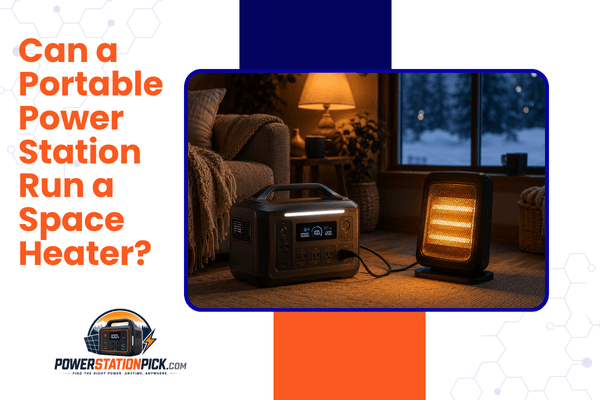
Yes — most portable power stations with at least 1,500W of continuous output can run a standard space heater, since space heaters are a simple resistive load (750–1,500W) with no motor-driven startup surge to worry about. The real limiting factor isn’t whether your unit can run it, but how long — a 1,500W heater running continuously will drain even a 1,000Wh power station in well under an hour. Space heaters are one of the most power-hungry devices you can plug into a portable power station, so this is a math problem more than a compatibility problem.
Why Space Heaters Are Different From Most Other Appliances
If you’ve read our guides on running a microwave or a sump pump off a power station, you’ve seen us talk a lot about surge — the brief power spike a motor needs to start spinning. Space heaters skip that problem entirely. They’re a purely resistive load, meaning the heating element draws roughly the same wattage the instant it turns on as it does the whole time it’s running. There’s no inrush current to plan around, which makes sizing simpler than it is for a fridge or a power tool.
That simplicity comes with a tradeoff, though: space heaters draw a lot of continuous power for a long time, which is a much harder combination for a battery to sustain than a quick appliance like a microwave that only runs for a few minutes at a time.
How Much Power Does a Space Heater Actually Use?
Most residential space heaters draw between 750W and 1,500W, depending on the model and heat setting:
| Heater Setting | Typical Wattage |
|---|---|
| Low / Eco mode | 500–750W |
| Medium | 1,000W |
| High | 1,500W |
The vast majority of plug-in space heaters top out at 1,500W specifically because that’s close to the practical limit of a standard 15-amp household circuit — 1,500W at 120V draws about 12.5 amps, right at the edge of what a typical outlet is rated to handle safely on a continuous basis.
Matching Your Power Station to a Space Heater
The output rating (continuous watts, not surge) is what matters here, since there’s no startup spike to plan around:
- Under 1,000W continuous output: Not enough for a full-power space heater. You’ll need to run it on low (500–750W) if your unit supports that wattage, or skip the heater entirely.
- 1,000–1,500W continuous output: Can run most space heaters on medium or low settings comfortably; running full 1,500W models on high will use most or all of your available output with little headroom for anything else running at the same time.
- 1,500W+ continuous output: Comfortably runs a space heater on any setting, with headroom left over for lights, a phone charger, or other small devices simultaneously.
If you’re not sure where your specific unit falls, our sizing calculator can help you check a heater’s wattage against your unit’s actual output rating rather than guessing.
The Real Constraint: Runtime, Not Compatibility
This is the part most people underestimate. A space heater isn’t hard to power — it’s hard to power for very long. Because heaters draw high, continuous wattage rather than a quick burst, they drain battery capacity far faster than almost anything else you’d typically plug into a power station.
| Power Station Capacity | 1,500W Heater (High) | 750W Heater (Low) |
|---|---|---|
| 768Wh (e.g., Bluetti AC70P) | ~30 minutes | ~1 hour |
| 1,070Wh (e.g., Jackery Explorer 1000 V2) | ~40 minutes | ~1.3 hours |
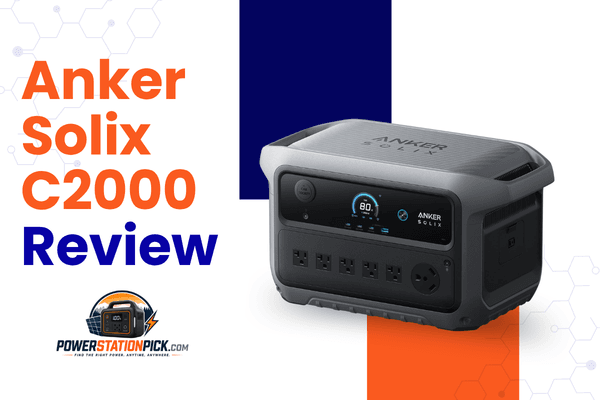
| 2,048Wh (e.g., Anker SOLIX C2000) | ~1.3 hours | ~2.6 hours |
| 3,840Wh (e.g., Pecron E3800LFP) | ~2.4 hours | ~4.8 hours |
Note: These figures assume continuous operation and don’t account for inverter efficiency losses (typically 10–15%) or thermostat cycling, which in real-world use extends practical runtime somewhat since most heaters aren’t drawing full wattage every second — they cycle on and off to maintain a set temperature. Still, even with cycling, a full night of heating is unrealistic on anything under roughly 2,000Wh unless you’re pairing the heater with a very low setting.
For a full side-by-side of capacity and output across every model we’ve reviewed, see the Portable Power Station Comparison Chart 2026.
Practical Ways to Make a Space Heater Work Better With a Power Station
- Use the lowest setting that keeps you comfortable. Dropping from 1,500W to 750W roughly doubles your available runtime for the same battery capacity — a meaningful difference during an extended outage.
- Choose a smaller, targeted heater over a whole-room unit. A compact personal heater drawing 500–750W is a far more sustainable match for a power station than a heater sized for an entire living room.
- Use a thermostat or timer if your heater has one. Letting the heater cycle off once a room reaches temperature — rather than running continuously — meaningfully extends real-world runtime compared to the constant-draw numbers in the table above.
- Pair with solar if the outage extends past a day. A single overnight charge won’t sustain space-heater-level draw for long, but solar input can meaningfully offset consumption during daylight hours. See How to Connect Solar Panel to Power Station for setup basics.
- Don’t run it alongside other high-draw appliances. A space heater already uses most of a mid-size unit’s continuous output on its own — adding a microwave or a large fridge compressor cycle on top of that risks tripping the unit’s overload protection.
Is This Actually a Good Use of a Power Station?
Worth asking honestly: for pure emergency heating during a winter power outage, a portable power station running a space heater is a legitimate short-term bridge — a few hours of warmth while you wait out a storm or a grid repair. But it’s not a substitute for a home’s primary heating system over an extended multi-day outage, simply because the math doesn’t favor it. A 3,000Wh+ whole-home-class unit can stretch a low-setting heater across several hours, but sustaining full-room heating for a full day or more would require either a much larger battery than most portable units offer, or continuous solar input to keep pace with consumption.
If home heating backup during outages is a recurring concern rather than an occasional one, it’s worth sizing your expectations — and your unit — around realistic multi-day scenarios. Our guide on Best Portable Power Station for Home covers capacity planning for exactly this kind of extended backup use.
A Note on Safety
Running any high-wattage resistive load near its rated ceiling generates real heat in the power station itself, not just the appliance. If you’re running a space heater at or near your unit’s continuous output limit for an extended period, keep the power station itself in a well-ventilated spot, away from bedding or enclosed spaces, and keep an eye on it during the first extended session with any new heater to make sure everything is running within normal temperature ranges. For a full breakdown of what normal warmth looks like versus a genuine problem, see our guide on Portable Power Station Overheating: What to Do, and if you’re using the heater indoors during an outage, Are Portable Power Stations Safe Indoors? covers ventilation basics worth reviewing.
Frequently Asked Questions
What size portable power station do I need to run a space heater? For a standard 1,500W heater on high, you need at least 1,500W of continuous output — not surge output, since space heaters don’t have a significant startup spike. For sustained runtime rather than just compatibility, a 2,000Wh+ capacity unit is a more realistic starting point.
Can a small power station run a space heater on low? Yes — dropping to a 750W low or eco setting brings most heaters within reach of smaller units (1,000W+ continuous output), and roughly doubles your runtime compared to running on high.
How long will a portable power station run a space heater? It depends heavily on capacity and heater wattage. A 1,000Wh-class unit running a 1,500W heater on high will typically last well under an hour; a 3,000Wh+ unit can stretch that to a few hours. See the runtime table above for specific estimates by capacity.
Do space heaters need surge power like a refrigerator or sump pump? No — space heaters are a resistive load, meaning they draw essentially the same wattage the moment they turn on as they do throughout operation. This makes them simpler to size for than motor-driven appliances, even though their continuous draw is high.
Is it safe to run a space heater off a portable power station overnight? It’s possible on a large enough unit, but most portable power stations don’t have the capacity to sustain a full-wattage space heater for a full night. A lower heat setting, a smaller personal heater, and monitoring the unit for the first extended session are all worth doing before relying on this setup unattended overnight.
Which is more efficient: running a space heater or bundling up with other backup heat sources? For short-term outages, a space heater on a power station is a reasonable option. For extended outages, combining a lower-wattage heater with insulation improvements (draft stoppers, heavy curtains) and layered clothing stretches your available battery capacity considerably further than relying on heater wattage alone.
Wattage figures for space heaters reflect typical manufacturer ratings across common household models. Always check your specific heater’s label for its exact wattage rating before sizing a power station around it.

Hi, I’m Andrew Richards. I created PowerStationPick to share what I’ve learned about portable power through real-world use—what actually works, what doesn’t, and what makes sense for different situations. I focus on helping you choose the right setup for home backup, camping, and everyday needs without overcomplicating things.