EcoFlow RIVER 2 Pro Review: Tested Against Real Owner Feedback
⚡ Quick Verdict
The EcoFlow RIVER 2 Pro delivers genuinely fast charging (0–100% in just 70 minutes) and a robust 800W continuous output (1,600W peak surge) in a highly portable 17.2 lbs package. It is the ultimate “Goldilocks” solution for camping, CPAP backup, and light off-grid workloads. However, be aware of two critical factors: independent testing shows its actual usable capacity runs slightly below the rated 768Wh, and its X-Boost feature cannot run inductive motor loads like heavy sump pumps. Additionally, remember to manually enable the AC output switch to avoid standby backup failures.
Every power station buyer eventually runs into the same sizing problem: the small units feel underpowered the moment you plug in anything beyond a phone, and the big units are overkill (and overpriced) if you’re just trying to keep a fridge cold for a weekend. The EcoFlow RIVER 2 Pro was built to sit in that gap — big enough to matter, small enough to actually carry.
It’s also been out long enough now to have a real paper trail: independent lab measurements, a large base of Amazon and eBay buyers, refurbished-unit resellers, and an active EcoFlow owner community on Reddit and deal forums. That’s a lot to work with. So instead of just repeating EcoFlow’s marketing copy, this review pulls together the verified specs, independent test results, and what owners are actually reporting after months of real use — the praise and the complaints both.
Methodology note: This review is built from manufacturer specifications, independent lab test data (OutdoorGearLab, TheSolarLab, and others), and real owner feedback synthesized from Amazon/eBay reviews, EcoFlow’s Reddit community, and deal-forum discussion threads — not from a unit we purchased and tested ourselves. Where a specific data point traces back to one source, that’s noted in context.
Technical Specifications
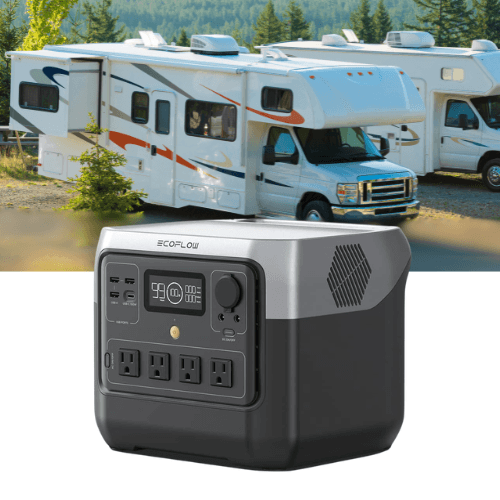
Boasting a record-breaking 0–100% recharge in just 70 minutes and a durable LFP battery built to last up to 10 years, the EcoFlow RIVER 2 Pro (768Wh) is the ultimate “Goldilocks” power station for weekend camping and CPAP backup.
| Specification | Details |
|---|---|
| Battery Capacity | 768Wh |
| Battery Chemistry | LiFePO4 (LFP) |
| Cycle Life | 3,000+ cycles to 80% capacity (~10 years of daily use) |
| AC Output | 800W Continuous | 1,600W Surge (X-Boost) |
| AC Fast Charge Time | ~70 minutes (0–100%) via X-Stream |
| Solar Input Max | 220W Max (11-50V 13A) |
| EPS Switchover Speed | < 30ms |
| Safety Certification | TÜV Rheinland Certified |
First Impressions and Build Quality
At 17.2 lbs on paper, the RIVER 2 Pro is marketed as an easy one-handed carry. In practice, more than one reviewer has noted it feels a bit heavier than the number suggests, partly attributed to handle placement that isn’t perfectly centered over the unit’s weight. It’s still well within “grab and go” territory — just don’t expect it to feel featherlight.
The design is straightforward EcoFlow: a clean LCD screen showing battery percentage, input/output wattage, and remaining runtime, with physical buttons for power and AC output. That last detail matters more than it sounds like it should — more on that below.
Build quality itself hasn’t been a consistent complaint across owner feedback. Where it does show up is around reliability at scale: threads on deal-aggregator forums referencing EcoFlow’s own Reddit community have pointed out that refurbished RIVER 2 Pro units show up for resale unusually often, with some posters speculating that firmware or app-related lockups — not core hardware failure — are driving a chunk of those returns. This is anecdotal community discussion rather than a documented failure rate from EcoFlow itself, and it’s worth reading in that context. But it’s a pattern echoed by more than one independent poster, so it earns a mention rather than a dismissal.
Real-World Performance & Technical Nuances
CPAP Machines
A CPAP without a heated humidifier draws roughly 30–60W. On a 768Wh battery, that’s comfortably multiple nights of runtime — this is one of the RIVER 2 Pro’s best-suited use cases, and it lines up with why EcoFlow markets the RIVER series heavily toward this exact scenario. If CPAP backup is your main reason for buying, our medical equipment power station guide covers sizing in more depth across multiple units.
Mini-Fridge and Camping Loads
At an average draw of 45–80W for a compressor fridge, expect somewhere in the 8–12 hour range on a full charge — solid for a weekend trip. Combined with lights and device charging, real-world combined draw for a typical car-camping setup lands in the 100–150W range, stretching total runtime into the 6–8 hour window at that combined load. For load-planning across a full trip, our How Many Watts Do I Need for Camping? guide walks through the math appliance by appliance.
Sump Pump Backup (The Inductive Load Warning)
Some owners have reported successfully running tiny 1/3 HP sump pumps during power outages. However, you must tread carefully here:
- Sump pumps utilize induction motors, which require massive inductive startup surges (often 3x to 4x their running watts).
- While EcoFlow’s X-Boost can run devices up to 1,600W, it does so by lowering the voltage. Do not use X-Boost on inductive motor loads—lowering voltage on a motor can cause it to stall, overheat, or trigger the power station’s overload protection.
- If your 1/3 HP pump’s raw starting surge exceeds the physical 1,600W inverter peak of the RIVER 2 Pro, the unit will shut down. For serious, unattended sump pump protection, step up to the Bluetti Elite 200 V2 or EcoFlow DELTA Pro 3.
⚠️ The AC Switch Trap: Like almost all premium power stations, the RIVER 2 Pro requires you to manually activate the AC outlets via a physical button. This is a built-in safety feature designed to prevent the internal inverter from slowly draining the battery (standby consumption). Do not forget to turn this switch ON if you are leaving the unit configured as an automatic EPS backup!
Charging Speed and Solar Performance
This is genuinely the RIVER 2 Pro’s standout feature. EcoFlow’s X-Stream fast charging delivers a full 0–100% charge in approximately 70 minutes from a standard wall outlet — independently confirmed across multiple test sources, with one lab measuring 75 minutes in their own run, close enough to the advertised figure to call it accurate. For a 768Wh unit, that’s a meaningfully fast turnaround; for comparison, older-generation units in this capacity range often took 4–7 hours.
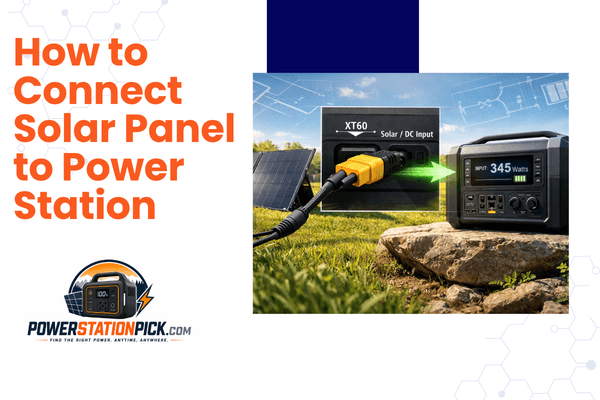
Solar charging is more modest: a 220W max solar input means a full charge takes 3.5 to 9 hours depending on panel wattage and sunlight conditions — EcoFlow’s own comparison materials cite the wider end of that range for realistic outdoor conditions rather than lab-ideal ones. If you’re planning a solar-dependent setup, our guide on How to Connect Solar Panel to Power Station covers connector types and realistic input expectations, and Best Time of Day to Charge Power Station With Solar helps you plan around that input ceiling.
Noise Levels
Independent lab testing flagged this specifically: under heavy charge or discharge, the RIVER 2 Pro’s fan can reach up to 62dB — loud enough that one reviewer called it a potential dealbreaker for anyone hoping to use the unit while working nearby or sleeping next to it. At light loads (phone charging, small devices), it’s quiet; the noise shows up specifically when you’re pushing meaningful wattage through it, which is worth knowing if quiet CPAP operation overnight is a priority. If noise level is a deciding factor for your use case, our Why Does My Portable Power Station Fan Make Noise? guide explains what drives fan behavior across different brands and load levels.
App Experience
EcoFlow’s app supports remote monitoring and charge-limit settings (useful for LFP longevity — capping charge at 80–90% extends cycle life, a point echoed by the long-term sump-pump owner mentioned above, who specifically uses a 90% charge limit). Multiple independent sources and forum discussions describe the app as functional but not flawless, with occasional bugginess reported by owners — consistent with the broader pattern of firmware-related complaints found in community discussion of this unit.
What Independent Testing and Real Owners Are Saying
Pulling together lab reviews, Amazon/eBay buyer feedback, and community forum discussion gives a fairly consistent picture:
The praise is consistent:
- Independent lab testing confirms the charging speed claim holds up in practice — one outlet specifically measured a 614Wh/hr charge rate, translating to a real-world full charge around 75 minutes.
- eBay buyer reviews describe the unit as high quality and something they’d buy again from the same brand, with others specifically noting it suits short power outages or general portable power needs well.
- The long-term sump-pump owner mentioned above reported being satisfied overall, specifically praising the unit’s capacity and its ability to absorb a real appliance surge without issue.
The criticism is real too:
- Independent lab testing found the actual measured battery capacity ran short of the 768Wh spec — a legitimate, testable discrepancy rather than an owner complaint, and worth factoring into your sizing math with some margin.
- The fan noise under load (up to 62dB) came up as a specific dealbreaker concern in independent testing for anyone planning to sleep or work near the unit while it’s under load.
- The single USB-C port and missing built-in light were flagged as missing conveniences relative to competitors in the same class.
- Community discussion on deal forums referencing EcoFlow’s Reddit community raised concerns about failure rates and slow customer service response, evidenced partly by the unusually large volume of refurbished units in circulation — though this is forum-level anecdote rather than a documented statistic, and should be weighed accordingly.
- The separate AC-output-bank switch is the most actionable complaint: it’s a real design choice that caused at least one documented real-world backup failure, and it’s worth testing your own setup end-to-end before relying on it during an actual outage.
Estimated Runtime for Common Loads
| Appliance Type | Average Draw | Estimated Runtime |
|---|---|---|
| CPAP Machine (No humidifier) | 40W | ~14–16 Hours |
| Car Camping Mini-Fridge | 50W avg | ~11–13 Hours |
| Workplace Laptop | 65W | ~9–10 Hours |
| Home Wi-Fi Router | 15W | ~40+ Hours |
| Microwave (Via X-Boost) | 1,000W–1,200W | ~35–45 Minutes (Intermittent use) |
Note: Runtime estimates assume roughly 85% inverter efficiency and account for the independently measured capacity shortfall noted above — real-world runtime may land slightly below these figures depending on your specific unit and conditions.
RIVER 2 Pro vs. The Rest of the RIVER 2 Lineup
Here is how the RIVER 2 Pro compares to its smaller siblings in ascending order of capacity:
| Feature | EcoFlow RIVER 2 | EcoFlow RIVER 2 Max | EcoFlow RIVER 2 Pro |
|---|---|---|---|
| Capacity | 256Wh | 512Wh | 768Wh |
| AC Output | 300W | 500W (1,000W X-Boost) | 800W (1,600W X-Boost) |
| AC Charge Time | 60 mins | 60 mins | 70 mins |
| Weight | ~7.7 lbs (3.5 kg) | ~13.4 lbs (6.1 kg) | 17.2 lbs (7.8 kg) |
| Best For | Ultralight day trips, phones | Light camping, laptops, drones | Weekend overlanding, CPAP backup |
For a side-by-side against other brands in this capacity class — Bluetti AC70P, Jackery Explorer 1000 V2, and more — see our full Portable Power Station Comparison Chart 2026.
✅ Pros
Fastest charging in its class — Charges from 0 to 100% in just 70 minutes (independently verified).
1,600W X-Boost surge — Easily handles high-wattage resistive appliances (like travel kettles or hair dryers) well beyond its 800W rating.
Genuinely lightweight — At 17.2 lbs, it offers a great power-to-weight ratio for a 768Wh unit.
TÜV Rheinland safety certified — The first portable power station line to earn this rigorous safety rating.
LFP chemistry — Highly durable LiFePO4 battery rated for 3,000+ cycles to 80% capacity (approx. 10 years of daily use).
Industry-leading warranty — Covered by a comprehensive 5-year warranty.
❌ Cons
Inverter limitation — X-Boost cannot run inductive motor loads; it will not reliably back up heavy motor-driven appliances like standard 1/3 HP or 1/2 HP sump pumps.
Measured capacity shortfall — Independent lab testing measured actual usable capacity slightly below the rated 768Wh spec.
Loud fan noise — Fans can ramp up to 62dB under heavy AC charge or discharge, which may disturb sleep or work.
Limited port selection — Only features a single USB-C port and lacks a built-in LED utility light.
Standby battery drain — The AC output bank must be manually turned on/off separately, which can lead to standby drain or backup failures if forgotten.
Modest solar input — A 220W max solar limit is average compared to newer competitors in this price range.
👉 Who Should Buy the RIVER 2 Pro?
Weekend campers and overlanders who need a lightweight, portable block of power for runtimes under 150W.
CPAP users who need a reliable, fast-charging unit to cover 2–3 nights of sleep (with heated humidifiers turned off).
Users prioritizing rapid recovery who want a power station that tops off in just over an hour from a wall outlet.
⚠️ Who Should Look Elsewhere?
Sump pump & heavy motor owners — Inductive startup surges will easily overload this unit. You need a larger system with a higher physical surge inverter, like the Anker SOLIX F2000 or EcoFlow DELTA Pro 3.
Light sleepers who plan to run high-draw devices or charge the unit in the same room overnight.
Tech-heavy users who need multiple dedicated high-speed USB-C outlets without relying on external adapters.
Frequently Asked Questions
Can the RIVER 2 Pro run a sump pump?
Only small 1/3 HP sump pumps with a startup surge of less than 1,600W. Remember, X-Boost cannot be used on inductive motor loads. If your pump pulls too much power on startup, the RIVER 2 Pro will trigger its overload protection.
Is the RIVER 2 Pro loud during operation?
At light loads, it is practically silent. Under fast AC charging or heavy discharge, the cooling fans can spin up to 62dB, which may be noisy for a quiet bedroom environment.
Does the RIVER 2 Pro support pass-through charging?
Yes. It supports pass-through charging and has an EPS switchover time of less than 30ms, meaning you can use it as an emergency backup for your Wi-Fi router or CPAP machine.
Does the RIVER 2 Pro actually hold 768Wh?
Independent lab measurement found the real-world capacity ran somewhat below the rated 768Wh. It’s still a capable unit for its class, but buyers doing tight runtime math should build in some margin rather than assuming the full rated capacity.
Is the RIVER 2 Pro good for CPAP machines?
Yes — at 30–60W of typical CPAP draw (without a heated humidifier), the RIVER 2 Pro comfortably covers multiple nights per charge, and its fast recharge time means less downtime between uses.
🏆 Final Verdict
The EcoFlow RIVER 2 Pro earns its “Goldilocks” reputation on the strengths that matter most for its target buyer: it charges faster than nearly anything else in its capacity class, it’s light enough to actually carry, and its surge ceiling gives it real versatility for high-draw resistive appliances. However, relying on it for heavy inductive loads like sump pumps remains a gamble due to core inverter limitations.
The research here also surfaced two things worth taking seriously before buying: independent testing found its real-world capacity runs a bit short of spec, and the separate AC-output-bank switch is a critical operational detail that requires manual activation — a setting that has caused real-world backup failures during actual outages when forgotten. Neither is disqualifying, but both are the kind of details a spec sheet won’t tell you and a five-minute test with your own appliances will.
For weekend campers, CPAP users, and buyers who prioritize rapid charging speed, the RIVER 2 Pro remains a strong pick in this capacity class — just go in knowing where the real-world friction points are.
Disclosure: This review is based on manufacturer specifications, independent lab test data, and synthesized user feedback gathered from Amazon, eBay, EcoFlow’s Reddit community, and deal-forum discussions across the web. We did not purchase or independently test a physical unit for this specific article. Some links in this article may be affiliate links, which means we may earn a small commission if you purchase through them — at no additional cost to you. This does not influence our ratings or recommendations.

Hi, I’m Andrew Richards. I created PowerStationPick to share what I’ve learned about portable power through real-world use—what actually works, what doesn’t, and what makes sense for different situations. I focus on helping you choose the right setup for home backup, camping, and everyday needs without overcomplicating things.